 By industry
 Pricing & Promotions
 Brand & Intelligence
 Digital Shelf & Search
 Assortment
 For Retailers
 E-Commerce Dashboard
 Flipkart Insights (Live)
  Grocery Intelligence
.svg) Grocery Price (U.S.)
Grocery Price (U.S.).svg) Quick Commerce (India)
Quick Commerce (India)  Food & Restaurant
 Fashion Intelligence
 Automotive
 Travel & Hospitality
 Real Estate
 Food Delivery Intelligence
  OTT & Streaming
  Fuel & EV Charging Price Tracker
  By Use Case
 Pricing Intelligence
 Digital Shelf Analytics
 MAP Monitoring
  Cross-Border Price Parity
  Share of Search
 Review Sentiment
 Kitchen Market Gaps
  Dynamic Pricing / AI Repricing
  Promotions & Deals Alerts
  B2B / POI & Lead Data
  AI Search Visibility Dashboard
  Baby Products on Quick Commerce
  Hotel & Flight Rate Parity
  By Region
 Flipkart Real-Time Insights
 Quick Commerce — Zepto · Blinkit
 Pincode Price Tracker
 GCC Q-Commerce — Talabat · Noon
  UK Grocery — Tesco, Sainsbury's, Asda
 AU Grocery — Coles & Woolworths
  Marketplace Scrapers
 Developer APIs
 Universal APIs
 Delivery & SDKs
 Knowledge Center
 Guides & Playbooks
 Downloads & Tools
 Trust & Company













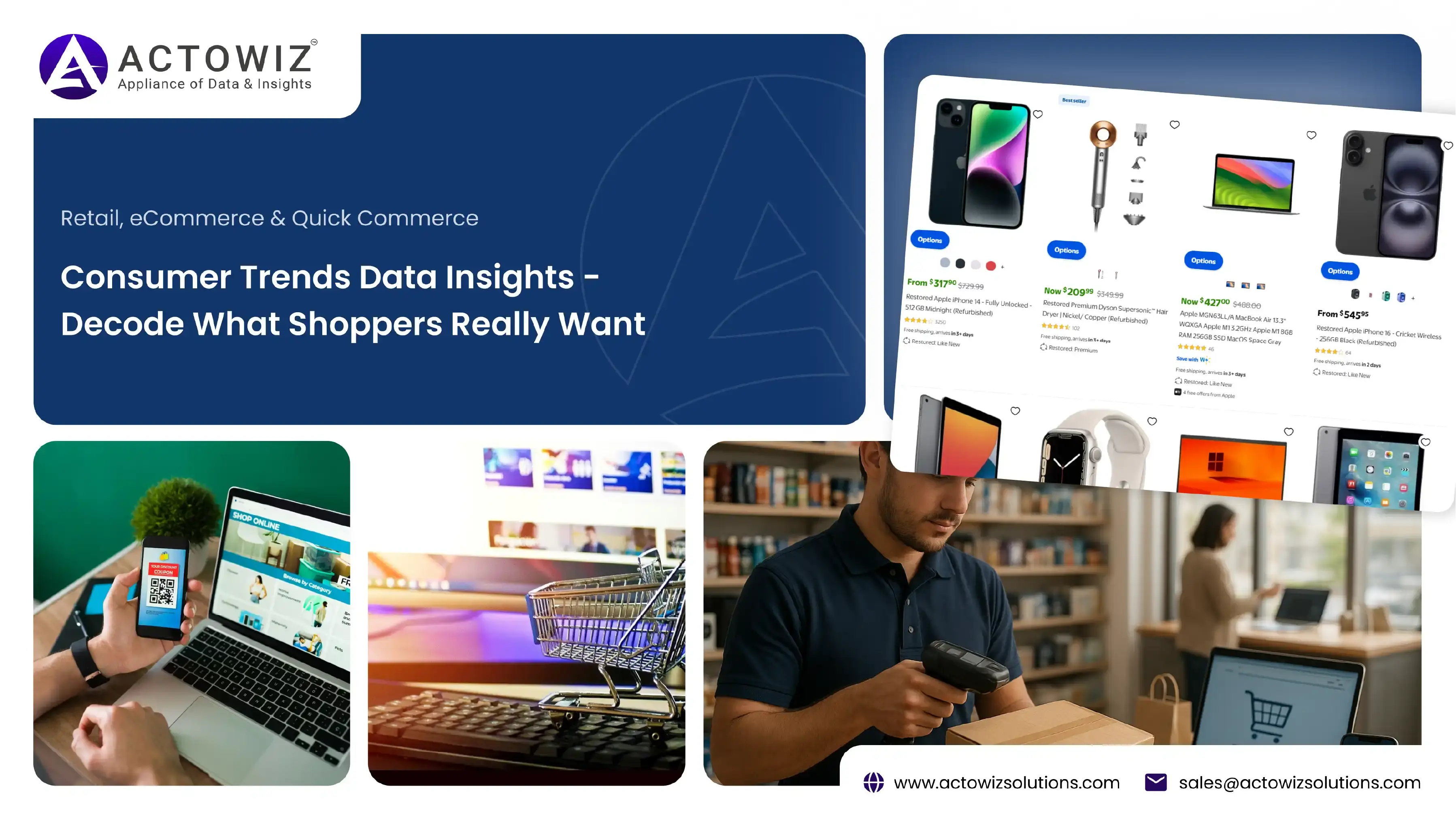
In today’s fast-paced retail landscape, understanding shopper behavior is no longer optional—it’s essential. Businesses leveraging Retail, eCommerce & Quick Commerce Consumer Trends Data Insights are gaining a competitive edge by analyzing purchasing patterns, price sensitivity, and product preferences. According to recent market reports, the UAE e-commerce sector grew by 25% from 2020 to 2023, while quick commerce services experienced a staggering 42% increase in order volume during the same period, highlighting the need for timely, actionable data.
Companies are now using Scraping E-commerce customer behaviour Data insights to capture transactional data, product views, and purchase frequencies across platforms. This approach reveals emerging trends, such as the increasing demand for sustainable products, seasonal spikes in grocery and FMCG categories, and shifts in brand loyalty. For instance, a 2022 survey showed 68% of online shoppers in the UAE compared prices across at least two platforms before purchasing.
In addition, web scraping For Quick commerce trends analysis enables businesses to monitor delivery times, product availability, and consumer engagement in real time. This insight allows rapid adjustments to inventory, marketing campaigns, and promotional offers, ensuring brands meet evolving expectations. Similarly, Scrape retail store data for competitive pricing Data allows retailers to benchmark pricing strategies against competitors, optimize discounts, and improve profit margins.
By combining these analytics, businesses can not only track consumer preferences but also predict future demand. Early adopters of Retail, eCommerce & Quick Commerce Consumer Trends Data Insights report a 15–20% increase in conversion rates and enhanced customer retention. As the retail ecosystem continues to evolve, leveraging these insights is becoming the cornerstone of strategic decision-making, ensuring businesses remain agile, competitive, and aligned with what shoppers truly want.







































 4.8/5 Average Rating
 50+ Video Testimonials
 92% Client Retention
 50+ Countries Served