NEW 2026

GCC Quick Commerce

Talabat · Careem Quik · Noon Minutes — live pricing across Dubai, Riyadh, Abu Dhabi & Jeddah. 18 GCC cities.

Launch Demo →
HOT

KitchenIntel

Cloud kitchen market gaps, ghost-kitchen tracking & strategy simulator. Plans from ₹9,999/mo.

See Pricing →
COMING SOON

UK Grocery Price Tracker

Tesco · Sainsbury's · Asda · Morrisons · Aldi — daily price comparison across all major UK grocers.

Get Early Access →
11+Dashboards
99.9%Accuracy
Want THIS view for your brand · your city · your category? Custom dashboard in 7 days. Free Consultation →

Executive summary

Crex Data Scraping - Solving Accuracy and Data Consistency Issues in Cricket Analytics

India's online retail surface has become too fast for human eyes and too fragmented for a single dashboard. Prices on the largest marketplaces now move multiple times an hour, and on quick-commerce apps a product's price and availability can change in seconds — and differently for every neighbourhood. For any team that prices against the market, protects MAP, manages a digital shelf, or feeds a pricing or analytics model, the question is no longer "do we have the data?" but "is the data we have current and correct right now, across every platform that matters?"

This report sets a practical benchmark for what "real-time, accurate, multi-platform" actually means in the Indian context in 2026 — across the eight platforms that define the market for most brands: Amazon, Flipkart, Myntra, Nykaa, Tata Cliq, FirstCry, Zepto, and Blinkit.

Key findings at a glance

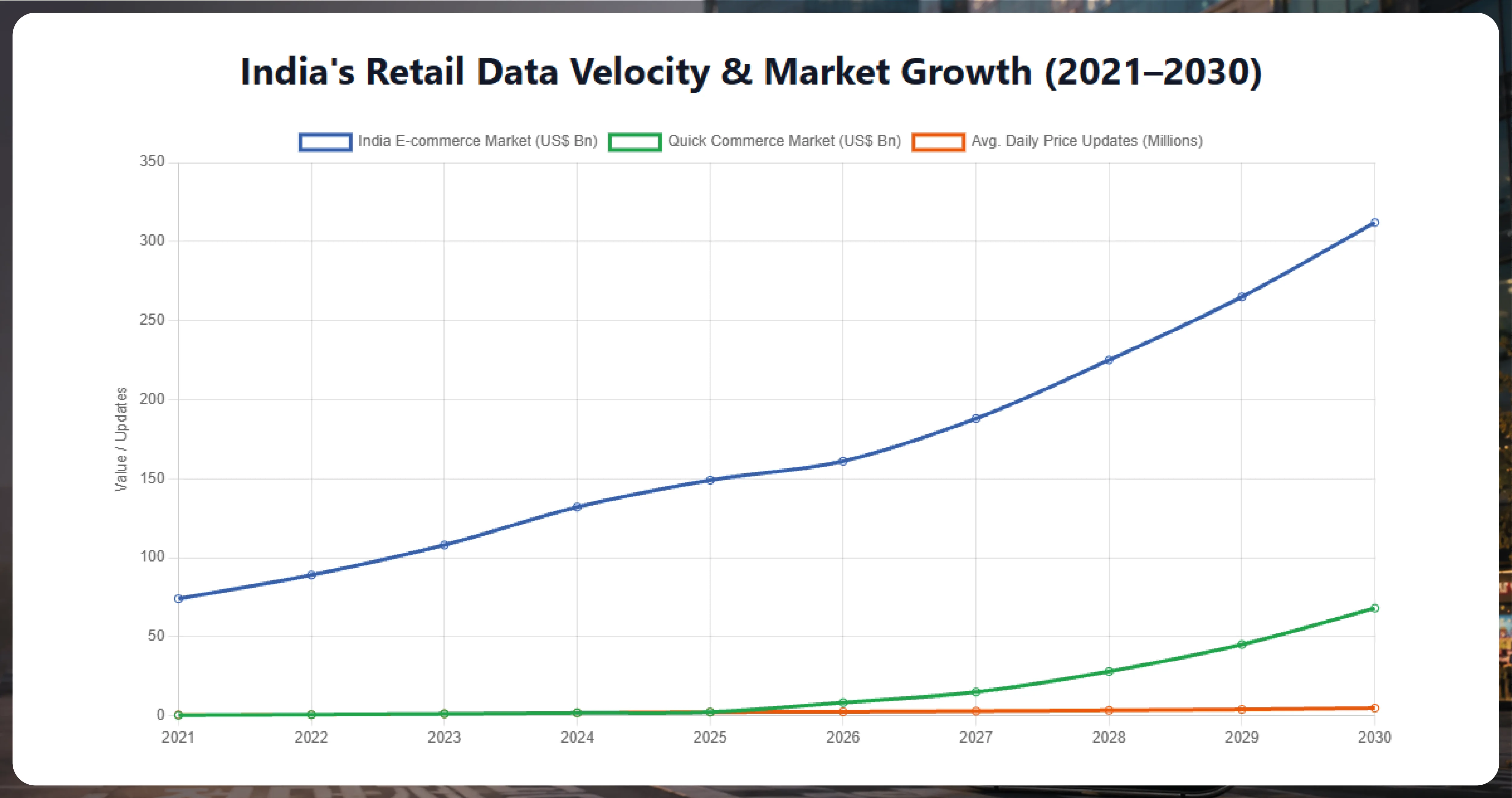
  • India's e-commerce market sits at roughly US$159–163 billion in 2026 and is compounding at 15–27% a year depending on the segment, on track toward US$300+ billion by 2030 (IBEF; Mordor Intelligence; Grand View Research, 2026).
  • Quick commerce is the fastest-moving layer ever seen in Indian retail: roughly a US$7–8 billion market in FY25, having compounded at 110–130% a year over 2021–25, and projected to reach US$65–70 billion by 2030 — nearly half of all incremental e-retail growth (IBEF, 2026).
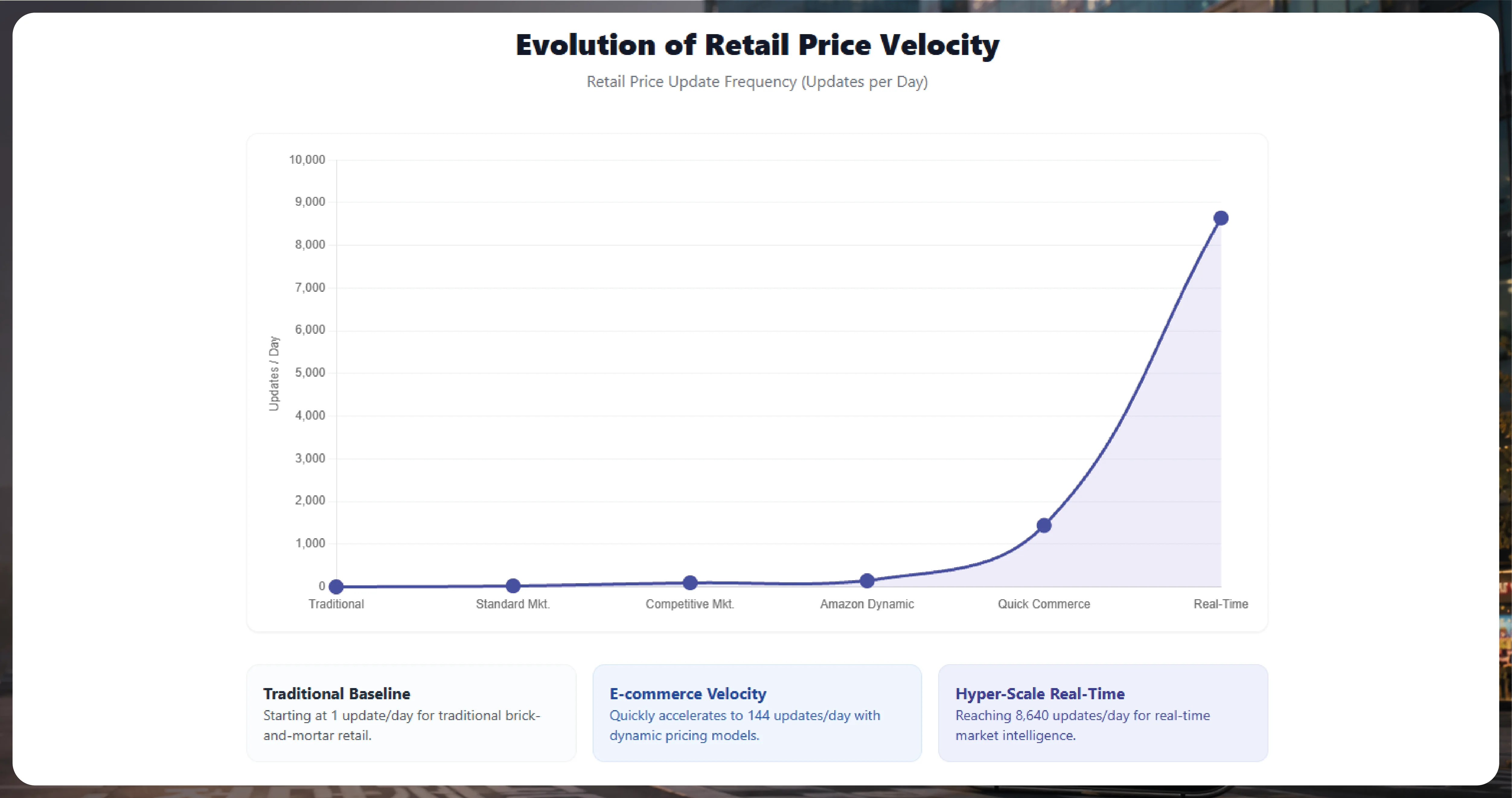
  • On the largest marketplace, automated systems make on the order of 2.5 million price changes a day, meaning the typical product reprices roughly once every ten minutes — about 50× more often than a traditional retailer (multiple industry sources, 2026).
  • On quick-commerce apps, price and stock change so fast that leading monitoring tools refresh data roughly every ten seconds, and an item visible at one price can be repriced or sold out within the same session (MetricsCart; ET Edge Insights, 2025–26).
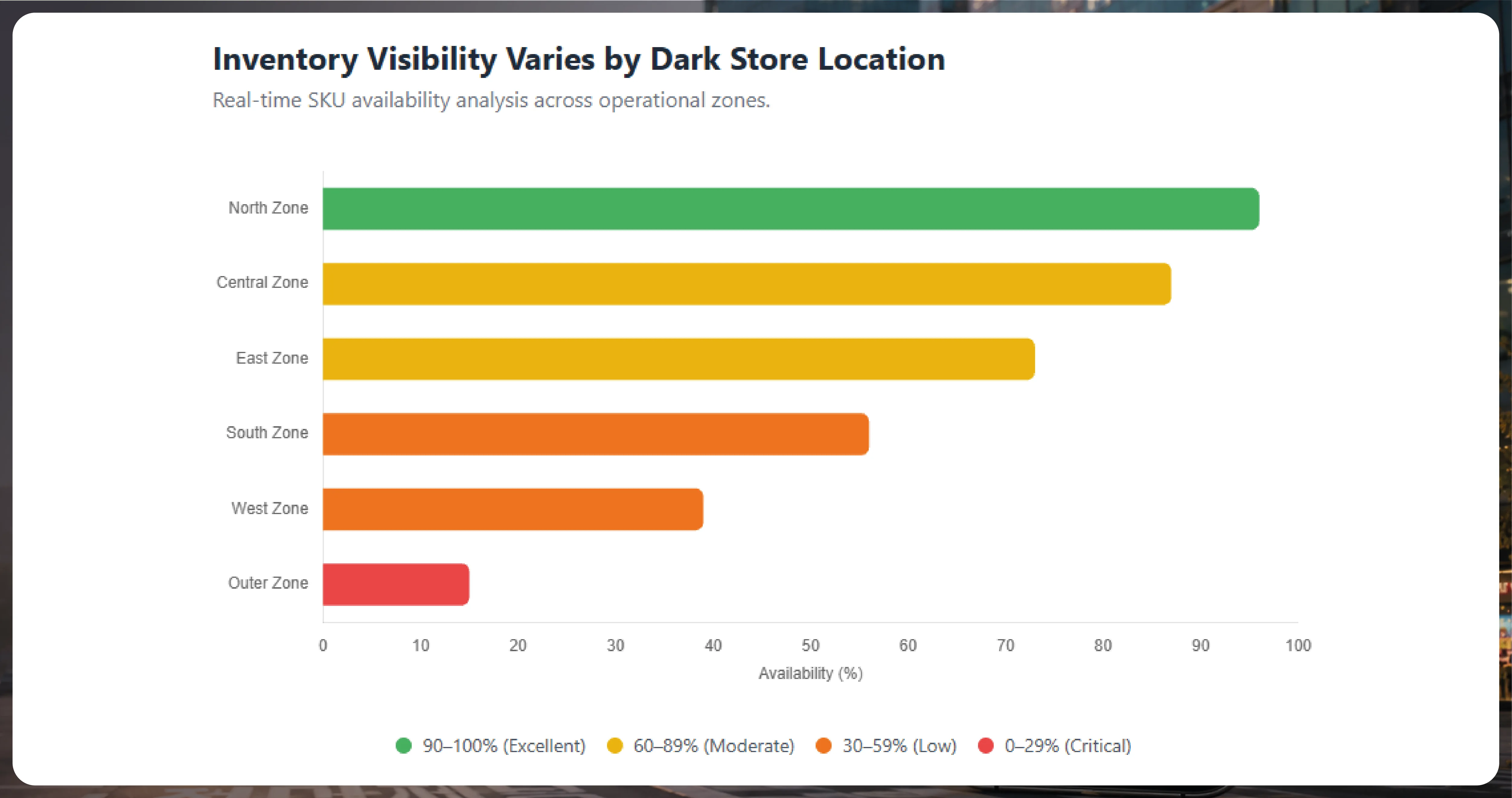
  • Availability is hyperlocal: a product can be "out of stock for half a city" because each dark store stocks a different assortment for its own pin-code radius — a blind spot that warehouse-level or once-a-day feeds cannot see (42Signals, 2026).
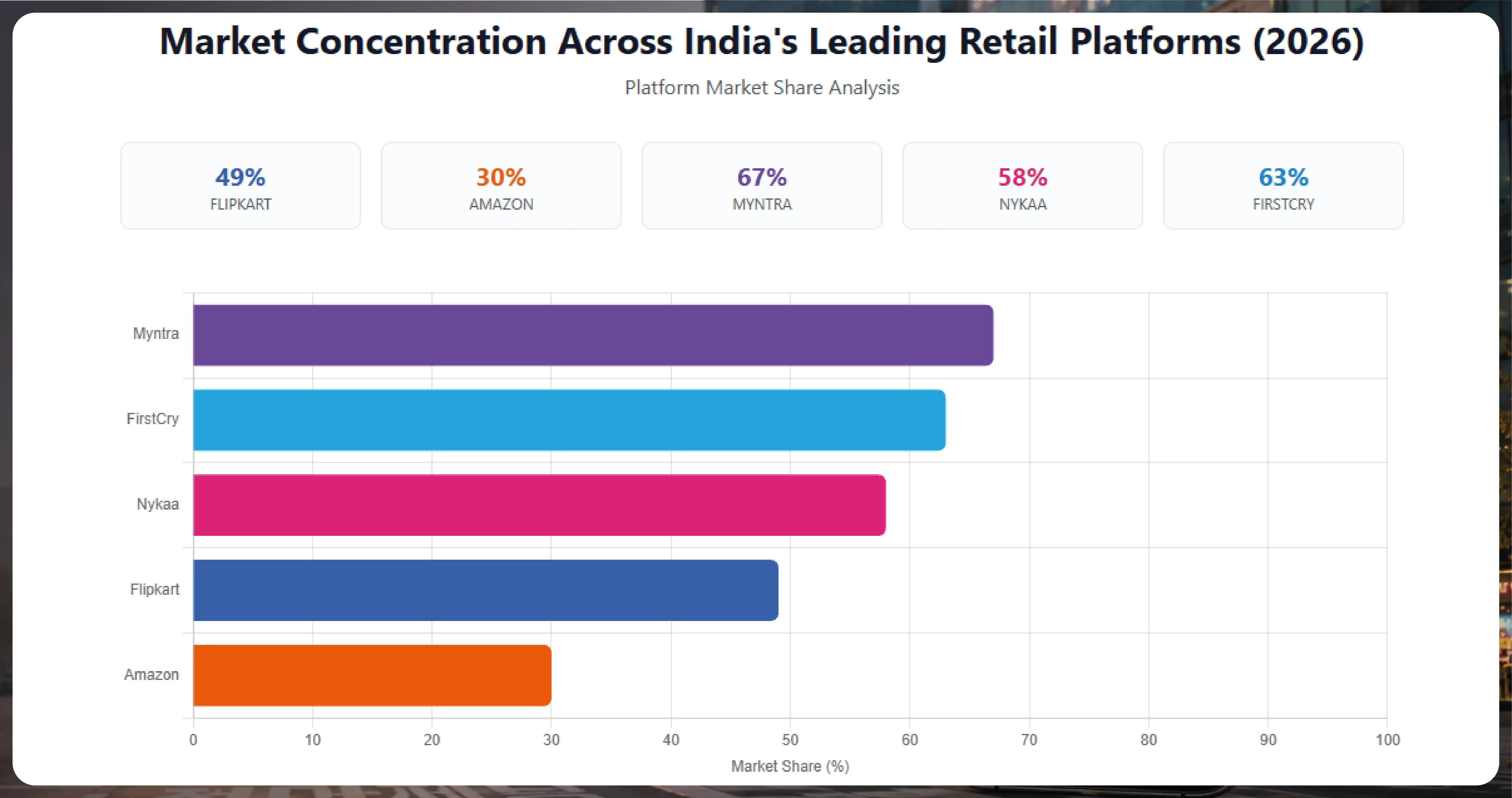
  • The market is concentrated enough that coverage gaps are expensive: Flipkart holds ~48–50% of GMV, Amazon ~28–32%, and Myntra ~65–68% of online fashion — so missing even one platform can mean missing a controlling share of a category (industry estimates, 2026).

The implication for data buyers is blunt: a feed that is a few hours stale, that covers six of eight platforms, or that reports a national price while ignoring dark-store-level reality, is not "slightly worse" — in this market it is wrong often enough to drive wrong decisions. The back half of this report defines a vendor-neutral benchmark for freshness, accuracy, coverage, and delivery that buyers can use to evaluate any data partner.

The landscape: why India is the hardest real-time data problem in retail

Crex Data Scraping - Solving Accuracy and Data Consistency Issues in Cricket Analytics

India's online retail market is large, fast-growing, and unusually fragmented across formats — and each format behaves differently.

Scale and growth. Estimates cluster around US$159–163 billion for 2026, with multiple analysts projecting the market past US$300 billion by 2030 (IBEF; Mordor Intelligence, 2026). Early-2026 tracking showed order volume up ~16% and GMV up ~18% year on year, with average order value rising — buyers are purchasing both more often and more per order (Admitad data via Storyboard18, 2026).

Three distinct layers, three distinct data problems. Analysts increasingly describe the market as three layers (productgrowth.in, 2026):

  • Traditional marketplaces (Amazon, Flipkart and verticals such as Myntra, Nykaa, Tata Cliq, FirstCry) — large catalogues, algorithmic repricing, Buy Box / search-rank dynamics.

  • Quick commerce (Zepto, Blinkit, Instamart) — 10–30 minute delivery, hyperlocal dark-store inventory, second-by-second price and stock movement.
  • D2C and social commerce — brand-owned storefronts and discovery on social platforms.

For a data buyer, the first two layers are where pricing and availability decisions are won or lost — and they require fundamentally different collection strategies.

Concentration raises the cost of a coverage gap. Flipkart commands roughly 48–50% of GMV and Amazon 28–32%, while category leaders dominate verticals — Myntra at ~65–68% of online fashion, Nykaa anchoring beauty, FirstCry anchoring the kids-and-baby category (industry estimates, 2026). Because a few platforms control most of each category, a data feed that "mostly" covers the market can still miss the platform that sets the price in a given vertical.

Price velocity: "real-time" is now a hard requirement, not a nice-to-have

Crex Data Scraping - Solving Accuracy and Data Consistency Issues in Cricket Analytics

The single biggest shift in the last three years is the frequency of price change.

Marketplaces. On the largest marketplace, automated pricing systems are reported to make in the order of 2.5 million price changes per day, so an individual product's price updates roughly every ten minutes — on the order of 50× more often than a traditional brick-and-mortar retailer (sellbery; stackinfluence, 2026). Third-party repricing tools used by sellers typically adjust every 10–15 minutes in competitive categories (goaura; repricer.com, 2026). A weekly or even daily snapshot, in this context, is describing a market that no longer exists by the time it is read.

Quick commerce is faster still. Industry reporting describes quick-commerce prices changing in seconds, with a product seen at ₹60 potentially repriced to ₹55 by the next refresh, and discounts, delivery times and search ranks shifting just as quickly (MetricsCart, citing ET Edge Insights, 2025). Tools built for this layer advertise refresh intervals of roughly ten seconds precisely because anything slower is stale on arrival.

Why it matters commercially. Price drives Buy Box eligibility and search visibility, and competitors raise prices when rivals go out of stock. A pricing or repricing engine fed by stale data will systematically lose the Buy Box, miss undercutting windows, and leave margin on the table — and it will do so silently, because the dashboard still "looks" populated.

Benchmark takeaway: For marketplaces, a defensible freshness target for competitive categories is intra-day, ideally sub-hourly. For quick commerce, meaningful monitoring requires near-real-time refresh (seconds to low minutes) at the dark-store / pin-code level.

The availability problem: stock is hyperlocal, and most feeds can't see it

Crex Data Scraping - Solving Accuracy and Data Consistency Issues in Cricket Analytics

Pricing gets the attention, but availability is where most data feeds quietly fail — especially in quick commerce.

On quick-commerce apps, a customer only sees a product as "available" if stock is physically present in the dark store serving their specific pin code. Inventory sitting in a mother warehouse is invisible to that shopper. The practical consequence, as brand teams report, is a product showing "out of stock for half a city" while a dashboard built on warehouse or national-level data still shows it as in stock (42Signals, 2026). During peak demand — a rainy evening, a festival window — a SKU can sell out within an hour in some dark stores while remaining available in others a few kilometres away.

This creates a measurement gap that ordinary e-commerce tools cannot close:

  • National availability ≠ local availability. A single "in stock / out of stock" flag per SKU is meaningless when the answer differs by neighbourhood.
  • Speed of change. With quick commerce doing over a million orders a day across the country (MetricsCart, 2026) and replenishment happening in hours, stock state decays fast.
  • Visibility = revenue. On these apps, if your SKU isn't in the serving dark store, you are not "ranked low" — you are absent, and absence is invisible in most reporting.

Benchmark takeaway: Availability data is only trustworthy if it is collected at dark-store / pin-code granularity, refreshed in near-real-time, and reconciled so that "available" reflects what a real shopper in that location would actually see.

The accuracy problem: where multi-platform feeds break

Crex Data Scraping - Solving Accuracy and Data Consistency Issues in Cricket Analytics

"High accuracy" is the requirement every buyer states and few vendors define. In practice, accuracy breaks down in five recurring ways across an eight-platform footprint:

  • Latency masquerading as accuracy. Data can be perfectly captured but hours old. In a market repricing every ten minutes, "yesterday's correct price" is today's error.
  • Coverage gaps. A feed strong on Amazon and Flipkart but thin on Myntra, Nykaa, Tata Cliq, FirstCry, or the quick-commerce apps leaves a buyer blind exactly where a category is decided.
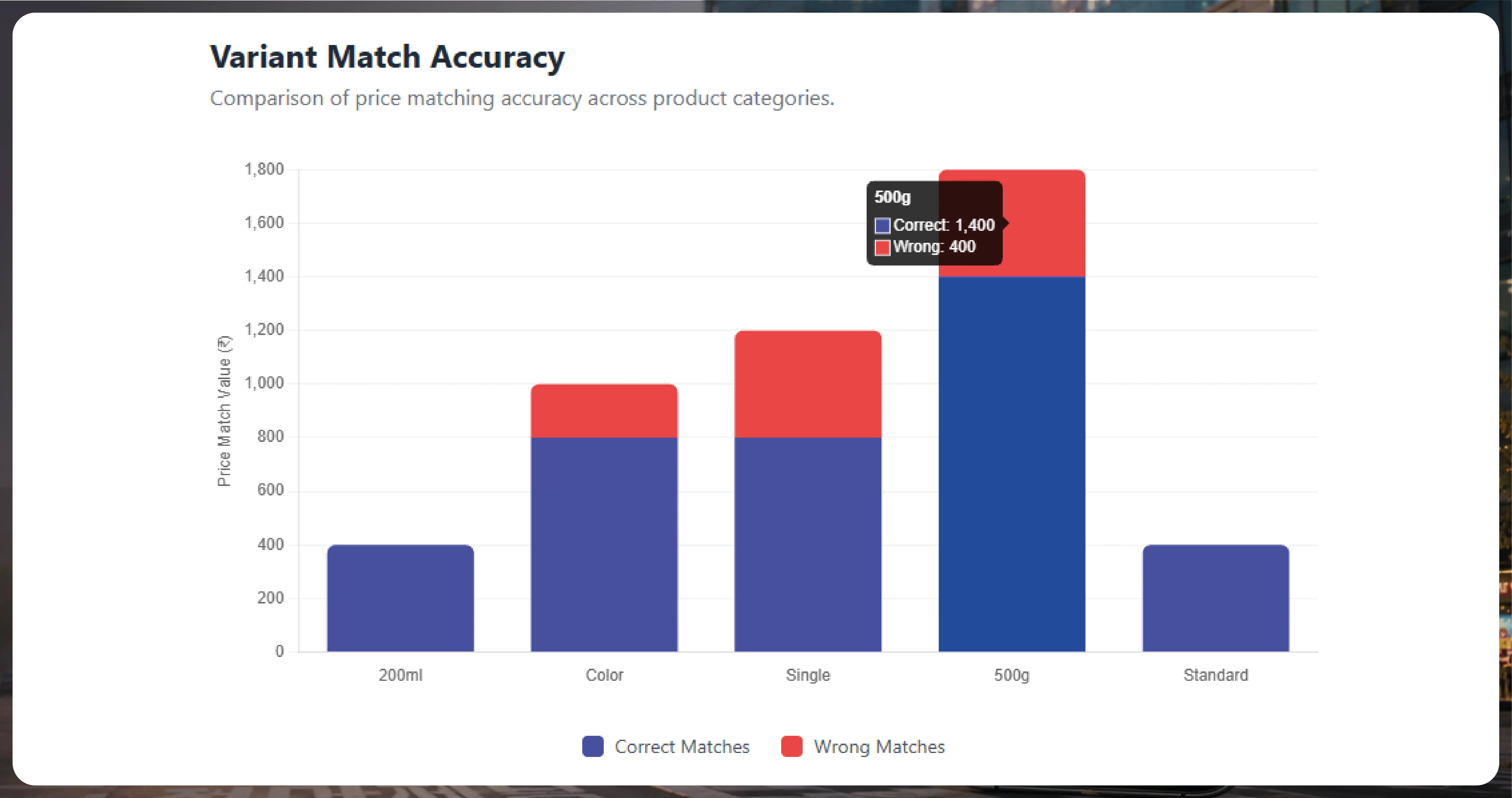
  • Variant and match errors. Mis-mapping a 200 ml vs 400 ml pack, a colour variant, or a multipack inflates or deflates apparent price gaps — a silent killer for repricing and MAP enforcement.
  • Hyperlocal blindness. Reporting one national price/availability where the platform actually serves dozens of localised answers.
  • Anti-bot fragility. Coverage that works in a test and then degrades silently when a platform changes its defences — producing gaps that look like "no change" rather than "no data."

The danger is that all five failure modes still produce a full-looking dashboard. The feed doesn't error out; it just gets quietly, expensively wrong.

Benchmark takeaway: Accuracy must be measured and reported, not asserted. Ask any data partner for a field-level accuracy rate, a freshness/age-of-data metric, a coverage map per platform, and a documented match-rate for variants.

The eight-platform coverage matrix

Platform Primary role Dominant data need Refresh expectation Hardest part
Amazon (India) Horizontal marketplace Price, Buy Box, offers, availability, ratings Intra-day / sub-hourly Buy Box & seller-level offer accuracy
Flipkart Largest marketplace by GMV Price, seller, availability, search rank Intra-day / sub-hourly Scale of catalogue; event-day spikes
Myntra Online fashion leader Price, discount, size availability, MRP/MAP Intra-day Size/variant-level stock
Nykaa Beauty & personal care Price, pack-size variants, promo, stock Intra-day Variant matching; bundle pricing
Tata Cliq Premium / electronics & fashion Price, MAP, availability Intra-day Authorised-seller / MAP context
FirstCry Kids, baby & maternity Price, pack variants, availability Intra-day Deep variant catalogue
Zepto Quick commerce Price, dark-store availability, delivery ETA Near-real-time (seconds–minutes) Pin-code-level inventory
Blinkit Quick commerce Price, dark-store availability, search rank Near-real-time (seconds–minutes) Hyperlocal coverage at scale

A buyer evaluating any partner should ask the coverage question per platform and per data field, not as a single "yes, we cover India" claim.

What "good" looks like: a vendor-neutral benchmark

Use the following to evaluate any real-time data partner (including this one). The point is to convert vague promises into measurable commitments.

Freshness (age of data)

  • Marketplaces: intra-day, sub-hourly for competitive/KVI categories.
  • Quick commerce: near-real-time, refreshing in seconds to low minutes at pin-code level.
  • The vendor should expose age-of-data per record, not just a collection schedule.

Accuracy

  • A stated, measurable field-level accuracy rate for price, availability, and key attributes.
  • A documented variant match-rate (the share of SKUs correctly mapped pack-to-pack, variant-to-variant).
  • A reconciliation method so "available" reflects real shopper-visible state.

Coverage

  • Explicit per-platform coverage for all eight platforms, including quick-commerce dark-store / pin-code granularity.
  • Category and geographic coverage maps, not a single national claim.

Reliability

  • An uptime / delivery SLA, with behaviour defined for platform defence changes (does coverage degrade visibly?).
  • Monitored anti-bot resilience so gaps surface as alerts, not silent zeros.

Delivery & integration

  • Clean, documented payload formats (JSON via API, plus bulk/feed options), stable schemas, and webhooks/alerts for price or stock changes.
  • A realistic onboarding timeline with a pilot/sample phase before commitment.

Commercials

  • Transparent pricing tiers tied to platform count, SKU volume, and refresh frequency — no surprise overage billing.

The business case: what stale or partial data actually costs

Because the failure modes are silent, the costs accrue without an obvious line item:

  • Lost Buy Box and search visibility from repricing on stale inputs — directly forfeited revenue on the platforms that matter most.
  • Margin leakage from reacting late to competitor moves, or from over-discounting against a price that has already changed.
  • MAP erosion that goes unnoticed until brand equity and channel relationships are damaged.
  • Phantom availability in quick commerce — paying for ads and demand generation while the SKU is invisible in the serving dark store.
  • Model decay for any pricing, forecasting, or analytics system fed by latent or incomplete data: garbage-in compounds quietly.

In a market repricing every ten minutes and selling out by the hour, the cost of "good enough" data is not a rounding error — it is a recurring, structural drag on revenue and margin.

Methodology and proprietary benchmark (template — insert Actowiz data)

Crex Data Scraping - Solving Accuracy and Data Consistency Issues in Cricket Analytics

Note for the Actowiz team: This section is where the report earns its authority and becomes AI- and journalist-citable. Replace the placeholders below with real figures from your own collection infrastructure. Even a few defensible, sourced numbers turn this from a summary of public data into a primary source that others cite.

  • Sample: [N] SKUs tracked across [8] platforms, [X] cities / [Y] pin codes, over [period].
  • Observed price-change frequency by platform and category: [insert Actowiz-measured medians].
  • Observed stock-out rate at dark-store level for quick commerce: [insert].
  • Measured data freshness delivered (median age-of-data): [insert].
  • Measured field-level accuracy vs. manual audit: [insert %].
  • Variant match-rate: [insert %].

A single citable statistic — e.g. "Across N SKUs, quick-commerce prices changed a median of X times per day in 2026" — can be quoted in AI answers and trade press for a full year. Prioritise generating two or three of these.

A buyer's checklist for choosing a real-time data partner

Before signing with any provider, get written answers to:

  • What is your median age-of-data per platform, and can you expose it per record?
  • What is your measured accuracy rate for price and availability, and how is it audited?
  • Do you cover quick commerce at dark-store / pin-code granularity, or only national-level?
  • What is your per-platform coverage for Amazon, Flipkart, Myntra, Nykaa, Tata Cliq, FirstCry, Zepto, and Blinkit?
  • What payload formats do you deliver (API/JSON, bulk feed), and how stable is the schema?
  • Do you offer change alerts / webhooks for price and stock movements?
  • What is your uptime SLA, and what happens when a platform changes its defences?
  • What is the onboarding timeline, and is there a free pilot / sample before commitment?
  • How are pricing tiers structured — by platform, SKU volume, and refresh rate — and is billing predictable?

If a provider can answer all nine with specifics, the data is probably trustworthy. If the answers are vague, the dashboard will look full and be wrong.

About Actowiz Solutions

Actowiz Solutions provides real-time pricing and stock-availability data across India's major e-commerce and quick-commerce platforms — including Amazon, Flipkart, Myntra, Nykaa, Tata Cliq, FirstCry, Zepto, and Blinkit — delivered through clean APIs and structured feeds with documented accuracy and freshness.

Evaluating a multi-platform, real-time data partner? Request standard pricing tiers, sample payloads, and an onboarding timeline — and run a free pilot on your own SKUs against the nine-point checklist above.
Request a sample
Social Proof That Converts

Trusted by Global Leaders Across Q-Commerce, Travel, Retail, and FoodTech

Our web scraping expertise is relied on by 4,000+ global enterprises including Zomato, Tata Consumer, Subway, and Expedia — helping them turn web data into growth.

4,000+ Enterprises Worldwide
50+ Countries Served
20+ Industries
Join 4,000+ companies growing with Actowiz →
Real Results from Real Clients

Hear It Directly from Our Clients

Watch how businesses like yours are using Actowiz data to drive growth.

1 min
★★★★★
"Actowiz Solutions offered exceptional support with transparency and guidance throughout. Anna and Saga made the process easy for a non-technical user like me. Great service, fair pricing!"
TG
Thomas Galido
Co-Founder / Head of Product at Upright Data Inc.
2 min
★★★★★
"Actowiz delivered impeccable results for our company. Their team ensured data accuracy and on-time delivery. The competitive intelligence completely transformed our pricing strategy."
II
Iulen Ibanez
CEO / Datacy.es
1:30
★★★★★
"What impressed me most was the speed — we went from requirement to production data in under 48 hours. The API integration was seamless and the support team is always responsive."
FC
Febbin Chacko
-Fin, Small Business Owner
icons 4.8/5 Average Rating
icons 50+ Video Testimonials
icons 92% Client Retention
icons 50+ Countries Served

Join 4,000+ Companies Growing with Actowiz

From Zomato to Expedia — see why global leaders trust us with their data.

Why Global Leaders Trust Actowiz

Backed by automation, data volume, and enterprise-grade scale — we help businesses from startups to Fortune 500s extract competitive insights across the USA, UK, UAE, and beyond.

icons
7+
Years of Experience
Proven track record delivering enterprise-grade web scraping and data intelligence solutions.
icons
4,000+
Projects Delivered
Serving startups to Fortune 500 companies across 50+ countries worldwide.
icons
200+
In-House Experts
Dedicated engineers across scrapers, AI/ML models, APIs, and data quality assurance.
icons
9.2M
Automated Workflows
Running weekly across eCommerce, Quick Commerce, Travel, Real Estate, and Food industries.
icons
270+ TB
Data Transferred
Real-time and batch data scraping at massive scale, across industries globally.
icons
380M+
Pages Crawled Weekly
Scaled infrastructure for comprehensive global data coverage with 99% accuracy.

AI Solutions Engineered
for Your Needs

LLM-Powered Attribute Extraction: High-precision product matching using large language models for accurate data classification.
Advanced Computer Vision: Fine-grained object detection for precise product classification using text and image embeddings.
GPT-Based Analytics Layer: Natural language query-based reporting and visualization for business intelligence.
Human-in-the-Loop AI: Continuous feedback loop to improve AI model accuracy over time.
icons Product Matching icons Attribute Tagging icons Content Optimization icons Sentiment Analysis icons Prompt-Based Reporting

Connect the Dots Across
Your Retail Ecosystem

We partner with agencies, system integrators, and technology platforms to deliver end-to-end solutions across the retail and digital shelf ecosystem.

icons
Analytics Services
icons
Ad Tech
icons
Price Optimization
icons
Business Consulting
icons
System Integration
icons
Market Research
Become a Partner →

Popular Datasets — Ready to Download

Browse All Datasets →
icons
Amazon
eCommerce
Free 100 rows
icons
Zillow
Real Estate
Free 100 rows
icons
DoorDash
Food Delivery
Free 100 rows
icons
Walmart
Retail
Free 100 rows
icons
Booking.com
Travel
Free 100 rows
icons
Indeed
Jobs
Free 100 rows

Latest Insights & Resources

View All Resources →
thumb
Blog

How Boots Healthcare Products Data Extraction Solves Pricing Visibility and Market Intelligence Challenges

Boots Healthcare Products Data Extraction delivers product, pricing, inventory, and promotion insights to support smarter healthcare retail decisions.

thumb
Case Study

How a Thai Travel Aggregator Used Booking + Expedia Price Comparison Data for Rate Optimization

Discover how a Thai travel aggregator leveraged Booking and Expedia price comparison data to optimize hotel rates, monitor competitor pricing, improve occupancy, and maximize revenue across destinations.

thumb
Report

The State of Real-Time Price & Stock Intelligence Across Indian E-Commerce and Quick-Commerce — 2026

Explore the state of real-time price and stock intelligence across India's e-commerce and quick-commerce ecosystem in 2026. Learn how brands track pricing, promotions, availability, and competitive movements across major marketplaces and instant delivery platforms.

Start Where It Makes Sense for You

Whether you're a startup or a Fortune 500 — we have the right plan for your data needs.

icons
Enterprise
Book a Strategy Call
Custom solutions, dedicated support, volume pricing for large-scale needs.
icons
Growing Brand
Get Free Sample Data
Try before you buy — 500 rows of real data, delivered in 2 hours. No strings.
icons
Just Exploring
View Plans & Pricing
Transparent plans from $500/mo. Find the right fit for your budget and scale.

Request Free Sample Data

Our team will reach out within 2 hours with 500 rows of real data — no credit card required.

+1
Free 500-row sample · No credit card · Response within 2 hours