
Core services
Enterprise Data Extraction

Scalable web, app and AI-powered collection across 40+ countries.

All 58 services →
New 2026
AI Training Data

Corpus building with provenance and opt-out compliance.

Learn more →
Free pilot
24-hour sample

We run collection on your own sources before you commit.

Get a sample →
58Services
40+Countries
DEVELOPER

Ready-Made Scrapers

Pre-built for top platforms. Self-serve, no setup.

View All →
TRY FREE

API Playground

Test endpoints instantly. No credit card.

Start Free →
28Tools
2SDKs
icons Delivery & SDKs
Streaming Crawl API Scheduler Realtime Alerts Webhook Delivery 🐍 Python SDK 💚 Node.js SDK
Need it managed instead?

Fixed monthly retainer, named engineer, no per-request metering.

Managed Data API →
HOT

Case Studies

How brands use Actowiz, with named outcomes.

Read →
FREE

Sample Datasets

Real output, no signup.

Download →
NEW

ROI Calculator

Model the return on a data engagement.

Calculate →
Platform · Lidl UK

Lidl UK Data Scraping

A discounter with a range that changes every week on purpose. Treat that as stock movement and your availability data becomes noise.

Lidl UK data scraping collects product listings, pricing and availability across Lidl's core grocery range and its weekly rotating non-food range. That second one is what makes Lidl distinct as a data problem: those lines appear on a schedule, sell through, and are not restocked — which a normal availability schema records as a constant stream of stockouts and delistings.

Everything on the Aldi page about own label applies here too. What is different is a range designed to disappear.

Free pilot on your own Lidl UK list, returned in 24 hours. No card, no trial clock — and you keep the sample data either way.

lidl_uk_2026-08-25.jsonl LIVE FEED
{"product_id":"lid-4471","is_rotating_range":false, "is_own_label":true,"cross_retailer_matched":false, "price":1.89,"currency":"GBP", "in_stock":true, "note":"core range — availability here is a real operational signal"} {"product_id":"lid-nf-2210","is_rotating_range":true, "availability_window_start":"2026-08-20", "availability_window_end":"2026-08-26", "in_stock":false,"ended_as_scheduled":true, "caution":"planned sell-through — NOT a stockout, NOT a delisting"} {"themed_week":"example themed week", "promo_mechanic":"as displayed", "note":"a range strategy, not a discount — tracked as a structure"}
3 of 104,110 product rows · UK online rangerotating range flagged · sell-through is not a stockout · schema v1.0

Independence and trademarks. Actowiz Solutions is not affiliated with, endorsed by or connected to Lidl UK or its owners. Lidl UK and related marks belong to their respective owners, used here only to name the publicly accessible source this service collects from.

Our Data Powers
B2C Marketplace
amazon
D2C + Marketplace
NYKAA
D2C + Marketplace
Walmart
FMCG Marketplace
udaan
Food Delivery
Uber Eats
Quick Commerce
blinkit
Taxi Aggregator
Uber
E-Commerce
Tmall
Lidl UK at a glance

How we handle Lidl UK specifically

Platform-specific handling, not a generic retail template pointed at a different domain.

Retailer
Lidl UK — hard discounter
Shared with Aldi
High own-label share, narrow core range, weak cross-retailer matching
What is different
A weekly rotating non-food range, by design
The trap
Sell-through recorded as a stockout. It is neither a stockout nor a delisting
What we do
Flag the line as rotating, with its scheduled availability window
Core range
Handled like Aldi — unit price at category level
Bakery
In-store, largely absent from online data. Stated, not implied
Refresh
Weekly for core; the rotating range needs the announcement cadence
Platform specifics

What the rotating range does to a dataset

These are the reasons a Lidl UK dataset needs its own handling rather than a shared retail schema.

Appear, sell through, gone — and none of that is a stockout

Lidl's non-food range operates on a published weekly schedule. Lines arrive, sell through in days, and are not replenished. The next week's lines are entirely different.

Run a conventional grocery availability schema over that and you get:

  • A constant stream of out-of-stock events that are actually planned sell-through.
  • A constant stream of delistings that are actually a range designed to end.
  • An availability rate that looks catastrophic and describes a working commercial model.

What we do instead

We flag is_rotating_range and capture availability_window_start and availability_window_end where the schedule is published. A line that has passed its window carries ended_as_scheduled: true rather than a stockout.

That single distinction is the difference between a Lidl availability series being usable and being noise. And it means core-range availability — which is a real operational signal — can be read without the rotating range drowning it.

Everything the Aldi page says about own label applies here

Lidl shares the discounter fundamentals: a high own-label share, a narrow core range, and cross-retailer matching that works only on the branded minority.

Rather than restate it, the position is the same:

  • Own-label lines are flagged and marked unmatched across retailers. No shared identifier, no equivalent product, never paired on name similarity.
  • matchable_share_category is reported before you commit.
  • Unit price at category level does the work a matched index normally would, which makes pack parsing the analysis rather than a support field.

The full argument is on our Aldi page, and it applies unchanged.

Where Lidl differs on promotions

Lidl runs a more visible promotional calendar than Aldi, with themed weeks and published mechanics. Those are captured as displayed and kept separate from base price, and the themed-week structure is worth tracking in its own right — it is a range strategy rather than a discount.

Two things that are not in the online data, said plainly

In-store bakery

Lidl's in-store bakery is a meaningful part of the proposition and it is largely absent from online listings. We do not have it, and we would rather say so than let a category coverage figure imply we do.

The full store range

As with any discounter, the online range is narrower than the store range. We collect what is published online.

Inferring store assortment from online listings is not something we do. The relationship between the two is not stable, and on a rotating range it is less stable still — a line can be in stores and never appear online at all.

If store-level range is what you need, that is a different exercise and not one extraction can answer.

Scope

What we collect on Lidl UK, and what we do not

The right column matters more than the left. Anyone can list fields; the limits are what tell you whether the dataset will hold up.

✅ What we collect

  • Core range listings, price and availability
  • is_rotating_range flagged, with availability windows where published
  • ended_as_scheduled, so planned sell-through is not recorded as a stockout
  • matchable_share_category reported per category before you commit
  • Own label flagged and marked unmatched across retailers
  • Pack parsed by us, with unit price on a stated basis
  • Displayed unit price captured, with disagreement flagged
  • Themed promotional weeks captured as a structure, not just a discount
  • Promotional mechanics as displayed, separate from base price

❌ What we do not, and why

  • Planned sell-through recorded as a stockout
  • Own-label lines matched to another retailer on name similarity
  • In-store bakery, which is largely absent from online listings
  • Store range inferred from the online range
  • Sales, volumes or category share

Core Lidl UK fields

The full dictionary is agreed during scoping. These are the fields specific to this platform.

Field What it is on this platform
product_id / ean / ean_missing_reason Identifiers, with nulls reasoned
is_rotating_range The field that keeps the availability series usable
availability_window_start / availability_window_end Where the schedule is published
ended_as_scheduled True where a line passed its window rather than selling out unexpectedly
is_own_label / cross_retailer_matched Flagged, unmatched where it cannot pair
matchable_share_category Reported per category, per batch
price / currency Displayed price
pack_size / pack_unit / price_per_unit / unit_basis Parsed, with the basis named
displayed_unit_price / unit_price_matches Theirs, and whether it agrees with ours
promo_mechanic / themed_week Mechanics, and the themed-week structure
in_stock / observed_at Online range only, with a timestamp
Use cases

What teams do with Lidl UK data

Core-range availability that means something

Rotating lines flagged and excluded from availability metrics, so core-range stockouts — which are a real operational signal — are readable instead of drowned in planned sell-through.

Rotating range as a category signal

What Lidl schedules into non-food weeks, and when, which is a read on where it sees seasonal opportunity that no other UK grocer's data provides.

Discounter category price floors

Unit price at category level as the floor competitors position against, without needing matched products.

Themed promotional week tracking

The themed-week structure captured as a structure rather than a series of discounts, which is what it actually is.

The 24-hour sample — run on your sources, not ours

Send us a Lidl UK item or category list. We run real collection against it and return the output within 24 hours, with the platform-specific fields populated so you can check them yourself rather than take our word for it.

  • Real extraction from your actual sources
  • Returned within 24 hours
  • Coverage and QA note included
  • You keep the data either way
  • No card, no trial clock
  • Named engineer on the call
Get my free sample Book a 20-min scoping call Reply within one business day. Reference calls available under NDA.
How we engage

Three ways to engage us

Same collection pipeline and QA underneath. The difference is who holds the schedule and how the data reaches you.

Managed service (most common)

We own the collection, the QA and the delivery. You receive clean data on a schedule and never touch a scraper.

  • Dedicated engineer assigned to your account
  • Site changes fixed by us, not reported to you
  • Scheduled delivery to your warehouse or S3
  • Named contact on Slack or email

Best fit: Teams who need the data, not the infrastructure.

API access

The same collection pipeline exposed as an authenticated REST endpoint your systems query directly.

  • On-demand and scheduled endpoints
  • Rate limits agreed to your load profile
  • Sandbox keys for integration testing
  • Versioned schema with deprecation notice

Best fit: Product and engineering teams building on live data.

One-time or project extraction

A defined pull for a specific question — market sizing, diligence, a pitch, a one-off audit.

  • Fixed scope agreed in writing upfront
  • Single delivery with full QA report
  • Methodology documented for your records
  • Converts to managed if you want continuity

Best fit: Research, strategy and diligence work with a deadline.

Pricing

Every engagement is quoted individually, because the honest answer depends on your scope: how many sources, how many records, how often, and how the data reaches you. We scope it with you, run a free pilot on your own sources, and then quote a fixed monthly figure — no per-request metering and no overage billing when volumes move. Request a quote and you will have a number after one call.

Lidl UK is usually collected alongside its competitors

Almost nobody buys a single platform in isolation. Lidl UK data becomes useful when it sits next to the competitor set on one schema, refreshed on one schedule, so a price index or availability comparison is genuinely like-for-like.

That is what grocery data scraping covers, and a Lidl UK-only engagement can be expanded into it without rebuilding. If you already know you need several platforms, start there instead — it is the same pipeline and usually the better scoping conversation.

FAQ

Lidl UK data scraping: frequently asked questions

Platform-specific questions, including what cannot be collected here.

Lidl's non-food lines arrive on a published weekly schedule, sell through in days, and are not replenished. The next week's lines are different products entirely.

A conventional availability schema records that as a constant stream of stockouts and delistings, producing an availability rate that looks catastrophic and describes a working commercial model. We flag the line as rotating with its window, so planned sell-through is not counted as a failure.

On branded lines with shared EANs, yes. On own label — the majority of the range — no, for the same reasons set out on our Aldi page. No shared identifier, no equivalent product.


We report the matchable share per category before you commit.

The discounter fundamentals are the same and we say so rather than restating them. What differs is the rotating range, which no other UK grocer runs at this scale, and a more visible themed promotional calendar.

If you are tracking both, they share a schema and the comparison between them is the interesting part.

No. It is a meaningful part of the proposition and largely absent from online listings. We would rather state that than let a category coverage figure imply we have it.

No. We collect what is published online, and the relationship between online and store range is not stable — on a rotating range less so, because a line can be in stores and never appear online at all.

Store-level range is a different exercise and not one extraction can answer.

We quote individually. The core range is inexpensive; the rotating range needs a refresh cadence matched to the announcement schedule rather than a fixed weekly one, which is the main cost variable.

One scoping call, a free pilot within 24 hours, then a fixed monthly quote. Request a quote.

See real Lidl UK data before you commit to anything

Send us an item or category list. We return the output within 24 hours with the platform-specific fields populated.

Free pilot, no card, no obligation. If we cannot collect a field you need on this platform, the sample shows you that too.

Social Proof That Converts

Trusted by Global Leaders Across Q-Commerce, Travel, Retail, and FoodTech

Our web scraping expertise is relied on by 4,000+ global enterprises including Zomato, Tata Consumer, Subway, and Expedia — helping them turn web data into growth.

4,000+ Enterprises Worldwide
50+ Countries Served
20+ Industries
Join 4,000+ companies growing with Actowiz →
Real Results from Real Clients

Hear It Directly from Our Clients

Watch how businesses like yours are using Actowiz data to drive growth.

1 min
★★★★★
"Actowiz Solutions offered exceptional support with transparency and guidance throughout. Anna and Saga made the process easy for a non-technical user like me. Great service, fair pricing!"
TG
Thomas Galido
Co-Founder / Head of Product at Upright Data Inc.
2 min
★★★★★
"Actowiz delivered impeccable results for our company. Their team ensured data accuracy and on-time delivery. The competitive intelligence completely transformed our pricing strategy."
II
Iulen Ibanez
CEO / Datacy.es
1:30
★★★★★
"What impressed me most was the speed — we went from requirement to production data in under 48 hours. The API integration was seamless and the support team is always responsive."
FC
Febbin Chacko
-Fin, Small Business Owner
icons 4.8/5 Average Rating
icons 50+ Video Testimonials
icons 92% Client Retention
icons 50+ Countries Served

Join 4,000+ Companies Growing with Actowiz

From Zomato to Expedia — see why global leaders trust us with their data.

Why Global Leaders Trust Actowiz

Backed by automation, data volume, and enterprise-grade scale — we help businesses from startups to Fortune 500s extract competitive insights across the USA, UK, UAE, and beyond.

icons
7+
Years of Experience
Proven track record delivering enterprise-grade web scraping and data intelligence solutions.
icons
4,000+
Projects Delivered
Serving startups to Fortune 500 companies across 50+ countries worldwide.
icons
200+
In-House Experts
Dedicated engineers across scrapers, AI/ML models, APIs, and data quality assurance.
icons
9.2M
Automated Workflows
Running weekly across eCommerce, Quick Commerce, Travel, Real Estate, and Food industries.
icons
270+ TB
Data Transferred
Real-time and batch data scraping at massive scale, across industries globally.
icons
380M+
Pages Crawled Weekly
Scaled infrastructure for comprehensive global data coverage with 99% accuracy.

AI Solutions Engineered
for Your Needs

LLM-Powered Attribute Extraction: High-precision product matching using large language models for accurate data classification.
Advanced Computer Vision: Fine-grained object detection for precise product classification using text and image embeddings.
GPT-Based Analytics Layer: Natural language query-based reporting and visualization for business intelligence.
Human-in-the-Loop AI: Continuous feedback loop to improve AI model accuracy over time.
icons Product Matching icons Attribute Tagging icons Content Optimization icons Sentiment Analysis icons Prompt-Based Reporting

Connect the Dots Across
Your Retail Ecosystem

We partner with agencies, system integrators, and technology platforms to deliver end-to-end solutions across the retail and digital shelf ecosystem.

icons
Analytics Services
icons
Ad Tech
icons
Price Optimization
icons
Business Consulting
icons
System Integration
icons
Market Research
Become a Partner →

Popular Datasets — Ready to Download

Browse All Datasets →
icons
Amazon
eCommerce
Free 100 rows
icons
Zillow
Real Estate
Free 100 rows
icons
DoorDash
Food Delivery
Free 100 rows
icons
Walmart
Retail
Free 100 rows
icons
Booking.com
Travel
Free 100 rows
icons
Indeed
Jobs
Free 100 rows

Latest Insights & Resources

View All Resources →
thumb
Blog

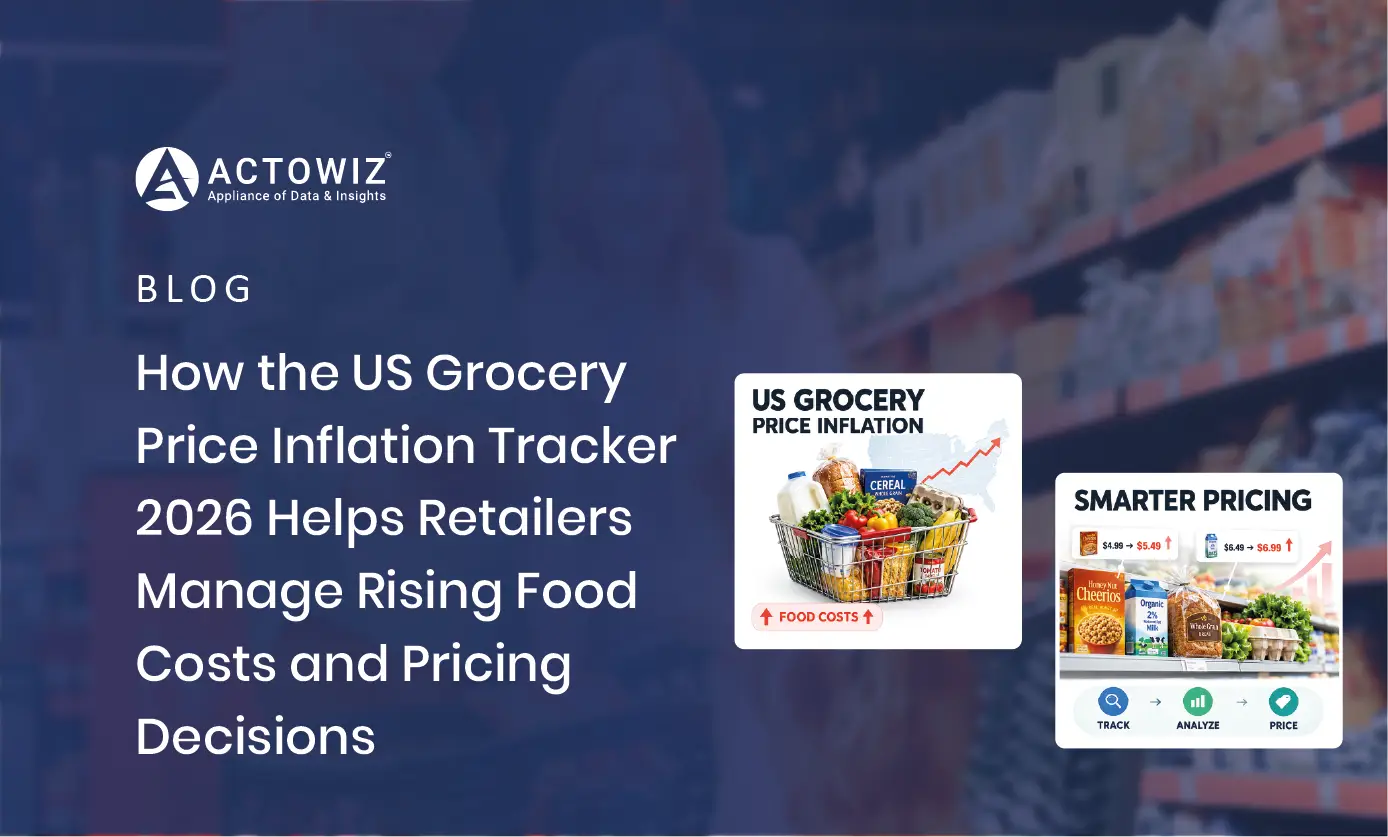
How the US Grocery Price Inflation Tracker 2026 Helps Retailers Manage Rising Food Costs and Pricing Decisions

Track the US Grocery Price Inflation Tracker 2026 to monitor food price trends, category changes, and inflation insights for smarter decisions.

thumb
Case Study

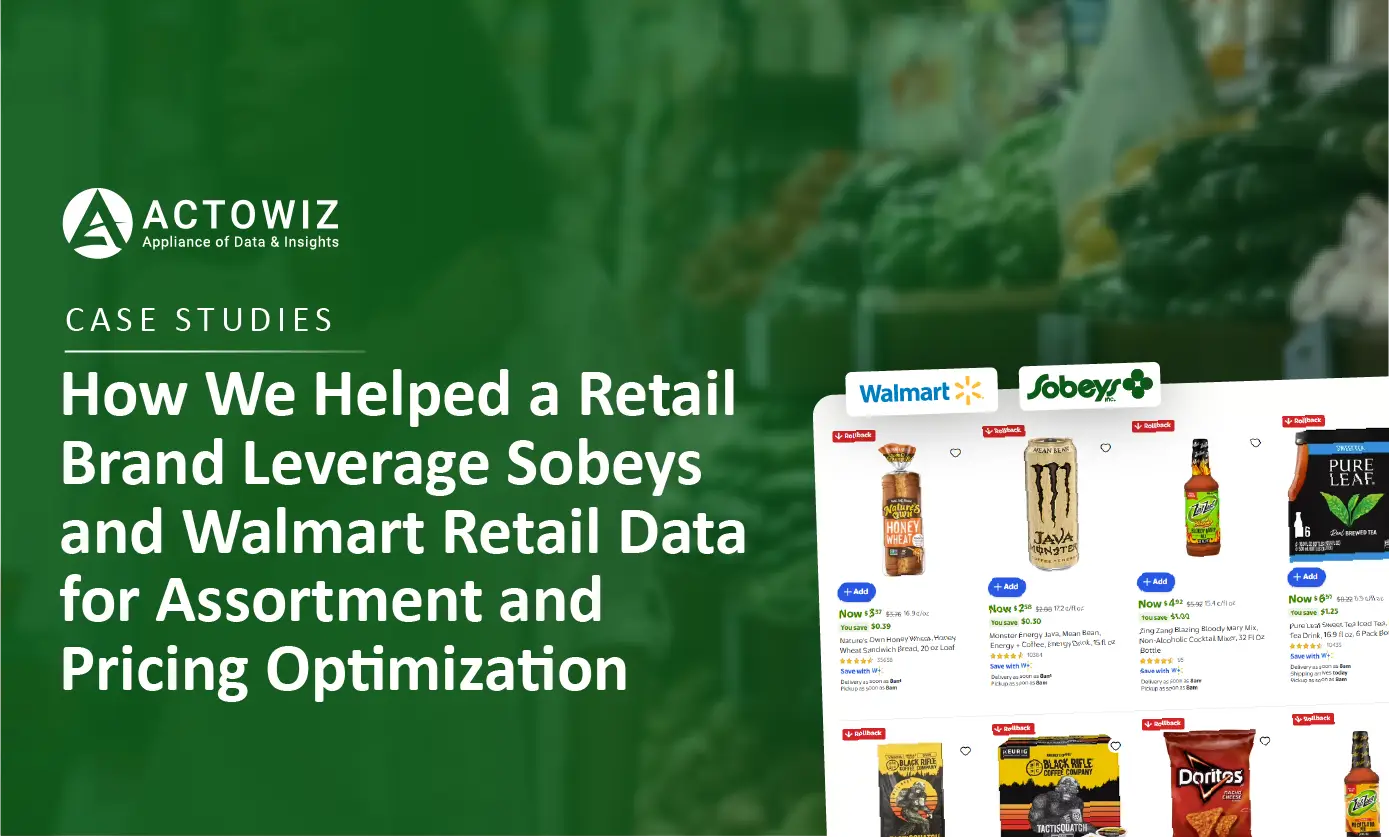
How We Helped a Retail Brand Leverage Sobeys and Walmart Retail Data for Assortment and Pricing Optimization

Discover how Sobeys and Walmart retail data scraping helps brands track prices, products, promotions, and assortment for smarter retail decisions.

thumb
Report

Zomato Restaurant & Menu Data Intelligence Report 2026

Zomato Restaurant & Menu Data Intelligence Report 2026 reveals restaurant, menu, pricing, ratings, and food delivery trends for smarter decisions.

Start Where It Makes Sense for You

Whether you're a startup or a Fortune 500 — we have the right plan for your data needs.

icons
Enterprise
Book a Strategy Call
Custom solutions, dedicated support, volume pricing for large-scale needs.
icons
Growing Brand
Get Free Sample Data
Try before you buy — 500 rows of real data, delivered in 2 hours. No strings.
icons
Just Exploring
View Plans & Pricing
Transparent plans from $500/mo. Find the right fit for your budget and scale.
Get in Touch
Let's Talk About
Your Data Needs
Tell us what data you need — we'll scope it for free and share a sample within hours.
  • icons
    Free Sample in 2 HoursShare your requirement, get 500 rows of real data — no commitment.
  • icons
    Plans from $500/monthFlexible pricing for startups, growing brands, and enterprises.
  • icons
    US-Based SupportOffices in New York & California. Aligned with your timezone.
  • icons
    ISO 9001 & 27001 CertifiedEnterprise-grade security and quality standards.
Request Free Sample Data
Fill the form below — our team will reach out within 2 hours.
+1
Free 500-row sample · No credit card · Response within 2 hours

Request Free Sample Data

Our team will reach out within 2 hours with 500 rows of real data — no credit card required.

+1
Free 500-row sample · No credit card · Response within 2 hours