Sourcing per SKU
Across manufacturer and distributor sources.
- Manufacturer sites first, distributors second
- Matched on identifier where available, attributes where not
- Multiple candidates per SKU, ranked
- Not-found reported with a reason

Scalable web, app and AI-powered collection across 40+ countries.
All services → By industry
Repricing driven by competitor moves rather than a weekly review.
Explore → Pricing & Promotions
 Brand & Intelligence
 Digital Shelf & Search
 Assortment
 For Retailers
Which solution fits?
Talk to ExpertTalabat, Careem Quik and Noon Minutes across 18 GCC cities.
Launch Demo →Tesco, Sainsbury's, Asda, Morrisons and Aldi, daily.
Get Early Access → By Industry
 E-Commerce Dashboard
 Flipkart Insights (Live) #1
 Grocery Intelligence
.svg) Grocery Price (U.S.)
Grocery Price (U.S.)
.svg) Quick Commerce (India) HOT
Quick Commerce (India) HOT
 Food & Restaurant
 Fashion Intelligence
 Automotive
 Travel & Hospitality
 Real Estate
 Food Delivery Intelligence NEW
 OTT & Streaming NEW
 Fuel & EV Charging Price Tracker NEW
 By Use Case
 Pricing Intelligence
 Digital Shelf Analytics
 MAP Monitoring HOT
 Cross-Border Price Parity NEW
 Share of Search
 Review Sentiment
 Kitchen Market Gaps NEW
 Dynamic Pricing / AI Repricing NEW
 Promotions & Deals Alerts NEW
 B2B / POI & Lead Data NEW
 AI Search Visibility Dashboard NEW
 Baby Products on Quick Commerce NEW
 Hotel & Flight Rate Parity NEW
 By Region
 Flipkart Real-Time Insights
 Quick Commerce — Zepto · Blinkit
 Pincode Price Tracker
 GCC Q-Commerce — Talabat · Noon NEW
 UK Grocery — Tesco, Sainsbury's, Asda
 AU Grocery — Coles & Woolworths NEW
Sources we already run pipelines against. Download a real sample from any of them.
Browse coverage → Marketplace Scrapers
 Developer APIs
 Universal APIs
 Delivery & SDKs
Fixed monthly retainer, named engineer, no per-request metering.
Managed Data API → Knowledge Center
 Guides & Playbooks
 Downloads & Tools
 Trust & Company
Scalable web, app and AI-powered collection across 40+ countries.
All 58 services → By industryRepricing driven by competitor moves rather than a weekly review.
Explore → Pricing & Promotions
Brand & Intelligence
Digital Shelf & Search
Assortment For RetailersWhich solution fits?
Talk to ExpertSources we already run pipelines against. Download a real sample from any of them.
Browse coverage →Talabat, Careem Quik and Noon Minutes across 18 GCC cities.
Launch Demo →Tesco, Sainsbury's, Asda, Morrisons and Aldi, daily.
Get Early Access → By Industry
E-Commerce Dashboard
Flipkart Insights (Live) #1
Grocery Intelligence
Grocery Price (U.S.)
Quick Commerce (India) HOT
Food & Restaurant
Fashion Intelligence
Automotive
Travel & Hospitality
Real Estate
Food Delivery Intelligence NEW
OTT & Streaming NEW
Fuel & EV Charging Price Tracker NEW
By Use Case
Pricing Intelligence
Digital Shelf Analytics
MAP Monitoring HOT
Cross-Border Price Parity NEW
Share of Search
Review Sentiment
Kitchen Market Gaps NEW
Dynamic Pricing / AI Repricing NEW
Promotions & Deals Alerts NEW
B2B / POI & Lead Data NEW
AI Search Visibility Dashboard NEW
Baby Products on Quick Commerce NEW
Hotel & Flight Rate Parity NEW
By Region Flipkart Real-Time Insights
Quick Commerce — Zepto · Blinkit
Pincode Price Tracker
GCC Q-Commerce — Talabat · Noon NEW
UK Grocery — Tesco, Sainsbury's, Asda
AU Grocery — Coles & Woolworths NEW
Marketplace Scrapers
Developer APIs Universal APIs Delivery & SDKsFixed monthly retainer, named engineer, no per-request metering.
Managed Data API → Knowledge Center
Guides & Playbooks
Downloads & Tools
Trust & CompanyA catalogue with missing images converts worse and ranks worse, and most teams know exactly which SKUs are affected. The reason it stays unfixed is rarely sourcing. It is rights.
A catalogue with missing images converts worse and ranks worse, and most teams know exactly which SKUs are affected. The reason it stays unfixed is rarely sourcing. It is rights.
Free pilot on your own sources, returned in 24 hours. No card, no trial clock — and you keep the sample data either way.
Last verified 5 August 2026 by the Actowiz Solutions Data Engineering team.
Every other service on this site delivers data. This one delivers files that somebody created, and copyright in a photograph belongs to whoever took it.
We will not tell you an image is safe to publish. We are not your counsel, we did not write your supplier agreements, and a vendor implying otherwise is handing you a liability with a delivery note attached.
We record the source of every single file — domain, URL, source type and retrieval timestamp. That turns an unanswerable question into an answerable one:
Most brands' supplier agreements already grant retailer image usage. The reason catalogues stay unfixed is not that rights are absent — it is that nobody can tell which image came from where. That is the problem this solves.
rights_cleared_by_actowiz is a constant false on every record, so nothing downstream can
mistake sourcing for clearance.
Sourcing is the easy part. The rest is what makes it usable.
Across manufacturer and distributor sources.
The field that makes the rights question answerable.
Perceptual, not filename-based.
Against your standard, not ours.
Only what you ask for, and reversibly.
Into your systems, on your terms.
A managed engagement, not a tool licence. We own the pipeline and everything that breaks in it.
One record per sourced file per SKU. The manifest is the deliverable as much as the files are.
| Field | Type | What it captures | Refresh |
|---|---|---|---|
client_sku / product_key |
string | Your identifier and our matched identity | Every record |
file_id |
string | Our identifier for the file, null where nothing was found | Every record |
source_type |
string | manufacturer_site, distributor, retailer or unknown | Found files |
source_domain / source_url |
string | Where it came from. The field that makes rights answerable | Found files |
retrieved_at |
timestamp | When we retrieved it | Found files |
perceptual_hash |
string | For dedupe across sources and for your own matching | Found files |
duplicate_of |
string | Links to the first instance, so both sources stay visible | Duplicates |
width / height / format / background |
number / string | As retrieved, before any normalisation | Found files |
meets_spec |
boolean | Against your stated standard | Found files |
is_primary_candidate |
boolean | Our suggestion for the lead image, not a decision | Found files |
not_found_reason |
string | Why nothing was sourced for this SKU | Not-found records |
rights_cleared_by_actowiz |
constant | Always false. We source; you clear | Every record |
The manifest is designed to be joined to your supplier agreement list. Source domain is the join key that makes that possible, and it is the reason this service works at all.
Find rates differ enormously by category, and we report yours before quoting.
Private label is the honest weak spot. If a product exists only under your own brand, there is no manufacturer source to enrich from, and the answer is photography rather than sourcing. Request a source we don't list →
We deliver into 40+ countries. These are the markets where this particular service is requested most, and the reason demand concentrates there.
| Market | Why demand concentrates here |
|---|
We run production collection across 40+ countries. Coverage depth varies by market and by source, so we confirm what is actually available for your specific markets during scoping rather than claiming uniform global coverage. Ask about a market we don't list →
Usually someone who already knows exactly which SKUs are missing images.
Has a catalogue with known image gaps and no route to filling them at scale.
Sourcing per SKU with source provenance, so the rights question becomes a join rather than an investigation.
Catalogue completeness
Products without images convert worse and rank worse, and the gap is measurable.
Find rate reported per category before commissioning, so the fix is scoped realistically.
Conversion recovery
Marketplace listing quality requirements block products from going live.
Files normalised to the marketplace's spec, with meets_spec flagged per file.
Listing approval rate
Will not approve using sourced imagery without knowing where it came from.
Source domain on every file, joinable to the supplier agreement list.
Rights defensibility
Needs consistent imagery across a catalogue assembled from many suppliers.
Normalisation to one spec, with originals retained and nothing retouched or generated.
Visual consistency
Wants retailers using approved assets rather than substitutes.
The reverse view — where retailers are using imagery that is not yours.
Asset compliance
Four patterns, and the last one runs in reverse.
Sourcing per SKU across manufacturer and distributor sources with a find rate reported per category, so a catalogue completeness project is scoped on real numbers rather than hope.
Outcome: Gaps closed on the SKUs where imagery exists, and honestly identified where it does not.
Source domain on every file, joined to your supplier agreement list, turning 'can we use this' from an investigation into a lookup.
Outcome: Legal sign-off in hours rather than a project that stalls.
Files normalised to a marketplace's dimension, background and format requirements, with meets_spec flagged so rejections are predictable.
Outcome: Listings that go live first time.
For a brand, the same perceptual hashing run against retailer listings shows who is using approved imagery and who has substituted their own.
Outcome: An asset compliance picture most brands cannot otherwise get.
Clients rarely permit naming. These are real engagement shapes with identifying detail removed, so you can judge whether the work resembles your situation.
Examples are anonymised at client request. Named references are available on request under NDA. See published case studies →
Before you commit to anything, we run this service against your own sources and send you the output. If the coverage isn't there, the sample will show you that too — which is the point. We would rather lose the deal at the pilot than at month three.
Same collection pipeline and QA underneath. The difference is who holds the schedule and how the data reaches you.
We own the collection, the QA and the delivery. You receive clean data on a schedule and never touch a scraper.
Best fit: Teams who need the data, not the infrastructure.
REST endpoints on the same pipeline, with sandbox keys for testing.
Best fit: Product and engineering teams building on live data.
A fixed-scope extraction for a single project or research question.
Best fit: Research, strategy and diligence work with a deadline.
Pricing is quoted individually, based on category scope, number of markets, cadence and ongoing identity maintenance. After a scoping call and free pilot, we quote a fixed monthly figure, with no per-request metering.
Book a 20-min scoping call Request a quote Talk to an engineer
All three are right in different places, and enrichment is not always the answer.
| Consideration | In-house scraping team | Generic proxy / DIY tool | Actowiz managed feed |
|---|---|---|---|
| Time to first usable data | 6–12 weeks of engineering before anything is trustworthy | Days, but output needs manual cleanup before use | Free pilot in 24 hours, production in 5–10 business days |
| Who fixes it when a source changes | Your engineers, at the cost of their roadmap | You do — tools report failures, they don't resolve them | We do, same business day, inside the retainer |
| Data quality assurance | Whatever your team has time to build | None beyond HTTP success | Schema validation plus sampled human QA on every run |
| Compliance documentation | Rarely produced, then requested urgently by legal | Not provided; terms risk sits with you | Sources, method and lawful basis documented for review |
| Accountability | Distributed across a team with other priorities | A support ticket queue | A named engineer and an account owner |
| True annual cost | Engineer salaries, proxies, hosting, ongoing maintenance | Low licence fee plus significant hidden analyst time | One fixed monthly retainer, quoted after scoping |
The same manufacturer photograph frequently appears on the manufacturer site, on two distributor sites and on three retailer listings. A naive dedupe keeps one and discards the rest.
We keep them all, linked by duplicate_of, because which source you got it from is the whole
question.
Discarding duplicates would throw away exactly the information that makes the deliverable usable. So the manifest shows every source we found an asset at, and you pick the one you can stand behind.
Near-duplicates are flagged separately from exact matches, because a lightly recropped version is a different file with potentially a different creator.
Normalisation means resizing, format conversion and background handling to your stated specification. It does not mean improving the picture.
meets_spec: false
and leave it. Upscaling a 400px image to 2000px produces a file that passes a dimension check and looks worse than
having no image.The original is retained alongside any normalised version, so a normalisation decision is reversible and auditable.
Send the SKU list. The find rate comes back before the quote.
Identifiers where you have them, attributes where you do not, plus target dimensions, format and background.
Before quoting. Branded electronics runs high; private label runs near zero, and that is worth knowing before commissioning a project.
Real sourced files for a subset of your SKUs, with the full manifest, so your legal team can see the provenance before you commit.
Join source_domain to your supplier agreements. That is a lookup rather than an investigation, and it is the step that makes the whole thing work.
With the manifest, originals retained, and our copies deleted on completion unless you have asked otherwise in writing.
Files delivered to your own Amazon S3, Google Cloud Storage or Azure Blob bucket, or pushed into your PIM. Manifest as JSON, JSONL, CSV or XLSX.
We collect only publicly accessible imagery and record the source of every file. Copyright remains with the rights holder; we do not grant, clear or imply any usage right, and rights_cleared_by_actowiz is set false on every record. Retention on our side is agreed in writing and files are deleted on completion by default.
These are contractual, not marketing copy. They appear in the engagement document.
| Commitment | What we hold ourselves to |
|---|---|
| Pilot turnaround | A real sample from your own sources within 24 hours of scoping, at no cost. |
| Go-live | Production collection running within 5–10 business days of sign-off. |
| Delivery punctuality | 99.5% on-schedule delivery, measured monthly and reported to you. |
| Breakage response | Source layout changes triaged same business day; critical sources inside 4 hours. |
| Data quality | Schema validation on every run plus sampled human QA before any delivery leaves us. |
| Escalation | A named engineer and an account owner, not a shared ticket queue. |
| Change requests | Field additions and source changes handled inside the retainer, not re-quoted. |
| Exit | Your historical data exported in full on request. No lock-in, no export fee. |
Plain definitions of the terms used on this page, so procurement and legal reviewers are working from the same vocabulary as your data team.
The rights questions come first because they are the ones that matter.
That depends on your agreements, and we cannot answer it for you. What we can do is record the source of every file — domain, URL, type and timestamp — so your legal team can answer it quickly.
Most retailer supplier agreements already grant image usage. The reason catalogues stay unfixed is usually that nobody can tell which image came from where, and that is exactly what the manifest solves.
Because which source you obtained a file from is the whole rights question. The same photograph on a manufacturer site and a distributor site is one file and two different permission situations.
We link duplicates with duplicate_of so the manifest shows every source we found it at, and you pick the one you can stand behind.
No. A generated product image is a misrepresentation of a physical object a customer will receive, whatever disclaimer accompanies it.
Where no imagery exists — which is the normal case for private label — the answer is photography, not sourcing, and we will say so rather than quoting for something that will find nothing.
No to both. Colour, shape and finish must remain what the source showed, because a shopper compares the delivered product to the published image.
Where a file is below your specification we flag meets_spec: false and leave it. Upscaling produces a file that passes a dimension check and looks worse than no image at all.
It depends heavily on category. Branded electronics and appliances run high; private label runs near zero because there is no manufacturer source to enrich from.
We report the rate on your own SKU list before quoting, so a completeness project is scoped on real numbers.
That one is monitoring — watching what imagery retailers publish, detecting changes, checking whether your approved assets are in use. This one is acquisition, filling gaps in your own catalogue.
Different purpose, different deliverable, and this one carries a rights question that monitoring does not.
Only for the retention window agreed in writing, and by default we delete our copies on completion. Files are delivered into your own bucket or PIM rather than held on a platform you access through us.
Yes, and it is a strong use. The same perceptual hashing run against retailer listings shows which retailers are using your approved assets and which have substituted their own.
That is a fixable digital shelf finding most brands cannot otherwise see.
We quote individually. Drivers are SKU count, category mix and whether normalisation and delivery into your PIM are in scope — category mix matters most because find rates vary so widely.
One scoping call, a free sample within 24 hours with the find rate per category, then a fixed quote. Enrichment is often a project rather than a subscription. Request a quote.
We return sourced files for a subset with the full provenance manifest, so your legal team can assess before you commit.
No sales sequence. If your catalogue is mostly private label, we will tell you enrichment will find little and photography is the answer.Our web scraping expertise is relied on by 4,000+ global enterprises including Zomato, Tata Consumer, Subway, and Expedia — helping them turn web data into growth.
Watch how businesses like yours are using Actowiz data to drive growth.
 4.8/5 Average Rating
 50+ Video Testimonials
 92% Client Retention
 50+ Countries Served
From Zomato to Expedia — see why global leaders trust us with their data.
Backed by automation, data volume, and enterprise-grade scale — we help businesses from startups to Fortune 500s extract competitive insights across the USA, UK, UAE, and beyond.


 Product Matching
 Attribute Tagging
 Content Optimization
 Sentiment Analysis
 Prompt-Based Reporting
We partner with agencies, system integrators, and technology platforms to deliver end-to-end solutions across the retail and digital shelf ecosystem.


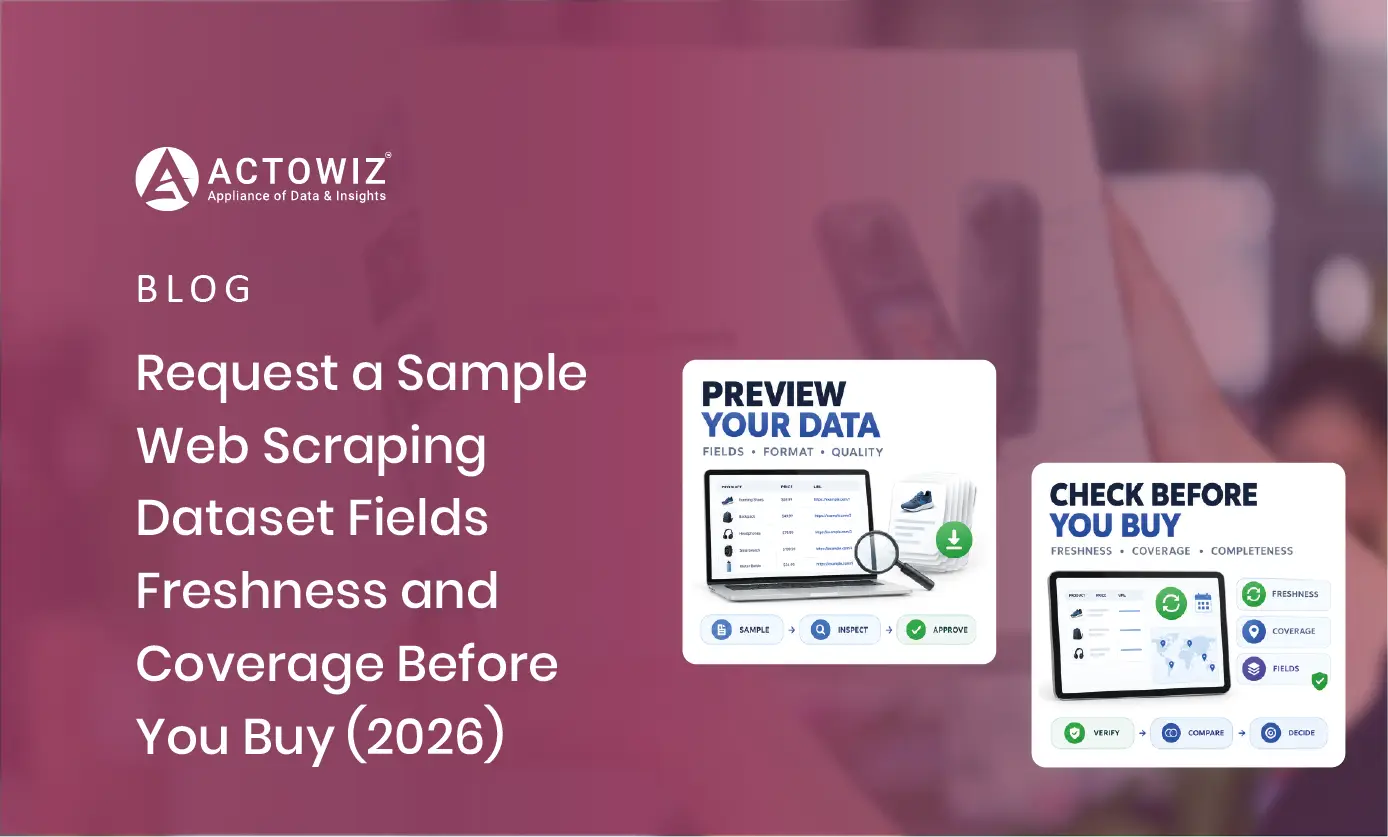
Request a sample web scraping dataset for retail, quick commerce, food delivery or travel. Check fields, freshness and coverage first.

Sensitive Skin Skincare Product Data API helps brands track cleansers, serums, moisturizers, and sunscreens with structured product data.
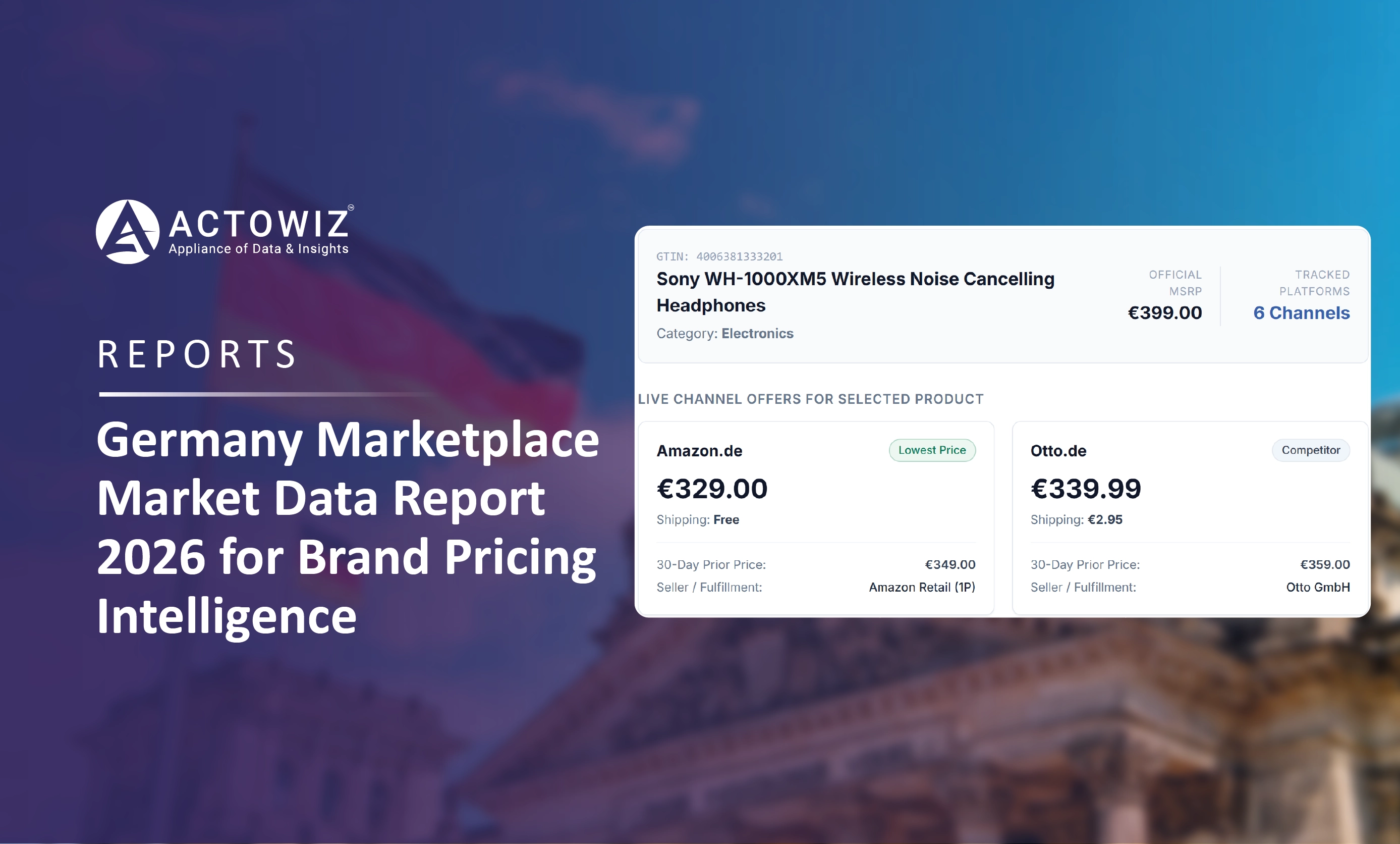
German marketplace data report 2026: online retail size, Amazon.de, Otto, Kaufland and Zalando price signals, PAngV rules and peak seasons.
Whether you're a startup or a Fortune 500 — we have the right plan for your data needs.