🎃 HALLOWEEN OFF Spooky Savings Event! Get FLAT 20% OFF on all Web Scraping & Data Extraction Plans 20% OFF Web Scraping Plans!
Ends in: 00d : 00h : 00m : 00s
🦇
👻
🎃 Spooktacular Limited Offer

Don’t Let High Data Costs Haunt You! 🎃

Get FLAT 20% OFF

T&C Apply

Scrape competitor prices, monitor MAP, and extract real-time datasets at a spooky discount this Halloween.

Offer Expires In:
00d : 00h : 00m : 00s
⚡ Claim 20% Discount Now
🎃
Promo Code Copied!
SPOOKY30 (20% OFF Applied)
Core services
Enterprise Data Extraction

Scalable web, app and AI-powered collection across 40+ countries.

All 58 services →
New 2026
AI Training Data

Corpus building with provenance and opt-out compliance.

Learn more →
Free pilot
24-hour sample

We run collection on your own sources before you commit.

Get a sample →
58Services
40+Countries
DEVELOPER

Ready-Made Scrapers

Pre-built for top platforms. Self-serve, no setup.

View All →
TRY FREE

API Playground

Test endpoints instantly. No credit card.

Start Free →
28Tools
2SDKs
icons Delivery & SDKs
Streaming Crawl API Scheduler Realtime Alerts Webhook Delivery 🐍 Python SDK 💚 Node.js SDK
Need it managed instead?

Fixed monthly retainer, named engineer, no per-request metering.

Managed Data API →
HOT

Case Studies

How brands use Actowiz, with named outcomes.

Read →
FREE

Sample Datasets

Real output, no signup.

Download →
NEW

ROI Calculator

Model the return on a data engagement.

Calculate →

Introduction

The rapid growth of digital publishing has made news and media information an important source of business intelligence. The News & Media Data Intelligence Report 2026 examines how organizations can monitor 24+ online sources daily to identify emerging stories, industry developments, competitor activity, market sentiment, and changing consumer conversations. Through structured News & Media data extraction, businesses can transform continuously published articles and media information into searchable datasets that support research, analytics, and strategic decision-making.

Daily monitoring becomes particularly valuable when organizations need visibility across multiple publications rather than depending on a single source. Structured collection can capture article headlines, publication dates, authors, categories, source names, article URLs, summaries, keywords, entities, and other publicly available attributes. Historical records can then help teams identify recurring topics, measure coverage, compare media visibility, and detect changes in market narratives.

Expanding Coverage Across the Digital Publishing Landscape

News intelligence becomes more valuable when businesses can monitor a broad and diverse source ecosystem. Web scraping news and media sources can help collect publicly available information from newspapers, business publications, industry portals, technology websites, financial publications, blogs, and other relevant digital sources.

The objective is not merely to collect articles. A structured workflow can classify content by source, topic, date, company, product, industry, location, and sentiment. This allows analysts to move from individual stories toward broader patterns.

Key Digital News Intelligence Metrics
Metric Example Intelligence
Sources monitored 24+ daily
Articles collected Source-dependent
Publication frequency Daily/hourly
Topics tracked Industry-specific
Entities identified Brands, companies, people
Historical records Date-stamped articles

The number of digital news sources has expanded significantly over the past decade, creating both opportunities and challenges for organizations seeking timely information.

2020–2026 Trend

In 2020, organizations increasingly relied on digital news channels as consumers and businesses shifted toward online information consumption. During 2021, remote operations and rapidly changing markets increased demand for timely industry updates. In 2022, organizations began placing greater emphasis on automated monitoring because manually checking multiple publications was becoming inefficient. During 2023, media intelligence workflows increasingly incorporated entity recognition, topic classification, sentiment analysis, and historical databases. In 2024, businesses expanded monitoring beyond traditional newspapers to include specialist publications, online magazines, blogs, and industry websites. By 2025, AI-assisted classification and automated summarization became increasingly relevant to large-scale media analysis. In 2026, monitoring 24+ online sources daily can provide businesses with a continuous stream of market signals. Organizations can compare coverage across publishers, identify emerging topics, monitor competitors, and detect potentially important developments earlier. A structured source-monitoring framework also makes it easier to maintain historical archives and evaluate how coverage changes over time.

Turning Daily Publications Into Business Signals

Daily media monitoring can support decision-making across marketing, public relations, competitive intelligence, investment research, and strategic planning. Daily News Data Collection & Media Intelligence provides a framework for organizing continuously published information into usable datasets.

A daily workflow can capture new articles, classify them by topic, identify relevant companies or products, and compare current coverage with historical records. This helps analysts distinguish isolated stories from sustained trends.

Media Monitoring Indicators
Indicator Business Application
Article volume Topic popularity
Source frequency Media visibility
Brand mentions Competitive monitoring
Sentiment Reputation analysis
Topic frequency Trend discovery
Publication timing Event monitoring
Geographic mentions Regional analysis
2020–2026 Trend

From 2020 to 2021, rapid changes in consumer behavior, business operations, and market conditions increased the importance of monitoring news continuously. In 2022, businesses increasingly moved from periodic media reviews toward automated daily collection. During 2023, structured media datasets became more useful for competitive intelligence because organizations could compare brand mentions, topics, and publication frequency over time. In 2024, media intelligence expanded into reputation monitoring, market research, customer sentiment analysis, and industry trend identification. During 2025, AI-based processing made it increasingly practical to classify large numbers of articles according to topics, entities, sentiment, and relevance. By 2026, daily collection can become a strategic intelligence layer rather than a simple news archive. Organizations can monitor competitor announcements, product launches, regulatory developments, market disruptions, partnerships, funding activity, and changes in consumer conversations. Historical daily datasets can also help teams understand how stories develop, how long topics remain relevant, and which sources consistently provide important information. This allows decision-makers to prioritize meaningful signals instead of manually reviewing every publication.

Structuring Articles for Search and Analysis

Large-scale media monitoring generates significant volumes of unstructured text. Extract news articles and media data workflows can transform this information into standardized records that are easier to search, compare, and analyze.

Typical fields may include article title, author, publication date, source, category, article URL, text or summary, entities, keywords, images where accessible, and collection timestamp.

Example Dataset Structure
Data Field Purpose
Article title Story identification
Source Publisher analysis
Publication date Historical tracking
Author Contributor analysis
Category Topic classification
Article URL Source reference
Keywords Topic discovery
Entities Company/person identification
Timestamp Monitoring history
2020–2026 Trend

In 2020, many media intelligence programs focused on collecting headlines and basic article information. During 2021, organizations began adding metadata and article-level context to improve research capabilities. In 2022, historical article datasets became increasingly important for identifying recurring narratives and tracking competitors. By 2023, businesses were combining article extraction with natural-language processing, entity recognition, and sentiment analysis. During 2024, structured media datasets increasingly supported dashboards and automated reporting systems. In 2025, AI-assisted classification helped organizations process large collections of articles more efficiently, allowing teams to identify relevant content without reading every item manually. In 2026, businesses can design article datasets around specific intelligence objectives. For example, a company monitoring its competitors can track competitor mentions, product announcements, acquisitions, pricing changes, executive statements, and market expansion. A financial research team can monitor corporate announcements and industry developments, while a marketing team can analyze brand visibility and sentiment. By standardizing article-level information, businesses can build searchable archives, create alerts, calculate media-share metrics, and develop historical trend models that support faster research and more informed decisions.

Creating a Broader View Across Multiple Publishers

No single publication provides complete visibility into an industry. Extract data from multiple news websites strategies allow businesses to combine information from different publishers and compare how stories are covered across the media landscape.

A multi-source dataset can help identify differences in article volume, publication timing, terminology, sentiment, and topic emphasis. It can also reduce dependence on one publisher when businesses are researching rapidly developing events.

Multi-Source Intelligence Framework
Data Dimension Example Analysis
Source Publisher comparison
Article volume Coverage intensity
Topic Subject classification
Entity Brand/company tracking
Date Timeline analysis
Sentiment Narrative comparison
Location Geographic coverage
Category Industry segmentation
2020–2026 Trend

During 2020–2021, businesses increasingly recognized that important information could emerge across multiple digital channels rather than traditional media alone. In 2022, organizations expanded monitoring to industry publications, specialist websites, and digital business media. During 2023, cross-source comparison became more important for competitive intelligence because different publications could emphasize different aspects of the same event. In 2024, businesses increasingly combined mainstream publications with specialist and regional sources to improve coverage. During 2025, automated classification made it easier to organize large volumes of content collected from different publishers. By 2026, multi-source monitoring can provide a more comprehensive view of market narratives. Businesses can compare how different publishers discuss the same company, product, event, or industry development. They can also identify which publications consistently report specific topics and how quickly different sources publish information. This creates opportunities for media-share analysis, competitor visibility measurement, trend detection, reputation monitoring, and market research. Historical cross-source records can further reveal changes in narrative direction, publication frequency, and topic prominence over months or years.

Building Scalable Monitoring Workflows

Organizations that need continuous media intelligence require more than one-time data collection. News Data Scraping Services can provide recurring workflows designed to monitor selected sources, capture newly published information, validate records, and deliver structured datasets.

A scalable process can be configured around source lists, collection frequency, keywords, entities, categories, geographic markets, and delivery requirements.

Workflow Components
Component Function
Source discovery Identify relevant publishers
Recurring collection Capture new content
Data parsing Structure article fields
Deduplication Remove repeated records
Classification Organize topics
Validation Improve data quality
Historical storage Preserve previous records
Delivery Feed analytics systems
2020–2026 Trend

Between 2020 and 2021, media monitoring was often heavily dependent on manual research and alerts. In 2022, organizations began adopting more automated collection workflows to reduce the time required to monitor expanding source lists. During 2023, recurring extraction became more valuable as companies started building historical media databases instead of relying on individual searches. In 2024, monitoring workflows increasingly incorporated data validation, deduplication, topic classification, and dashboard integration. During 2025, organizations increasingly explored AI-assisted processing to prioritize relevant stories and summarize large collections. By 2026, scalable media monitoring can operate as a continuous data pipeline. A business can define a list of 24 or more relevant sources and establish daily collection schedules. Each new article can be compared with historical records, categorized, and delivered to an analytics environment. This approach supports competitive intelligence, market research, reputation monitoring, content strategy, investor research, and industry analysis. Recurring workflows also create a historical record that can be queried later, allowing analysts to investigate how media coverage changed before, during, and after significant business events.

Measuring the Value of Continuous Media Intelligence

A research framework should connect collected media data with measurable business outcomes. The News & Media Data Intelligence Report 2026 demonstrates how daily monitoring can support organizations that need timely visibility into competitors, industries, markets, and public conversations.

Rather than measuring success only by the number of articles collected, businesses can evaluate source coverage, relevant-story detection, topic growth, brand mentions, sentiment changes, and response time.

Example Performance Metrics
Metric Measurement
Sources monitored 24+ daily
Relevant articles Filtered by topic/entity
Brand mentions Daily/weekly/monthly
Topic growth Percentage change
Sentiment Positive/neutral/negative
Source diversity Number of active publishers
Historical coverage Month-over-month comparison
Alert response Detection-to-action time
2020–2026 Trend

From 2020 to 2021, media monitoring primarily focused on collecting relevant news and responding to major developments. During 2022, businesses increasingly wanted structured metrics showing how often brands, competitors, and industries appeared in the media. In 2023, organizations began combining media volume with sentiment, topic classification, and historical comparisons. During 2024, dashboards and automated reporting made these measurements easier to distribute across business teams. In 2025, AI-assisted analysis improved the ability to identify relevant stories and summarize large content collections. By 2026, organizations can move toward continuous media intelligence in which source coverage, topic growth, sentiment, entity mentions, and publication frequency are measured systematically. A daily dataset can support alerts when a competitor receives an unusual increase in coverage, when a new topic begins gaining attention, or when sentiment around a brand changes. Historical measurements can also help organizations evaluate the impact of campaigns, announcements, product launches, and corporate events. This turns media monitoring from a reactive research task into an ongoing intelligence capability that supports strategic planning and faster decision-making.

Actowiz Solutions provides structured data collection and intelligence workflows designed around specific business requirements. The News & Media Data Intelligence Report 2026 approach can be adapted for organizations that need daily monitoring across 24+ online sources, specific industries, competitor lists, geographic markets, or business topics.

Our approach can include:

  • Multi-source news and media monitoring
  • Daily or scheduled data collection
  • Article metadata extraction
  • Company and brand mention tracking
  • Topic and keyword classification
  • Historical media datasets
  • Duplicate detection and data validation
  • Sentiment and trend analysis
  • Structured CSV, JSON, Excel, or database-ready delivery
  • Dashboard-ready data feeds
  • Customized source monitoring
  • Recurring collection workflows

The collected data can be normalized so that articles from different publishers follow a consistent structure. This makes it easier to compare sources and build historical analyses.

Actowiz Solutions can also customize monitoring around specific entities, including companies, products, brands, industries, executives, markets, or topics. This enables businesses to focus collection on information that directly supports their research objectives.

Conclusion

Digital media has become a continuously changing source of business intelligence. Organizations that monitor multiple publishers every day can gain earlier visibility into competitor activity, market developments, emerging trends, product announcements, industry conversations, and reputation changes. The ability to organize this information historically makes the data even more valuable because businesses can compare current events with previous coverage.

The News & Media Data Intelligence Report 2026 demonstrates how a structured monitoring strategy can transform 24+ online sources into an actionable intelligence layer. Instead of manually reviewing individual websites, organizations can establish recurring collection, classification, validation, historical storage, and analytical workflows.

Actowiz Solutions combines a scalable Web Crawling service with Web Data Mining capabilities to help businesses build customized news and media datasets. These workflows can support competitive intelligence, market research, media monitoring, reputation analysis, investment research, and strategic planning.

Contact Actowiz Solutions today to build a customized daily news and media intelligence solution for monitoring 24+ online sources and turning real-time information into actionable business insights!
Contact Us Today!
Social Proof That Converts

Trusted by Global Leaders Across Q-Commerce, Travel, Retail, and FoodTech

Our web scraping expertise is relied on by 4,000+ global enterprises including Zomato, Tata Consumer, Subway, and Expedia — helping them turn web data into growth.

4,000+ Enterprises Worldwide
50+ Countries Served
20+ Industries
Join 4,000+ companies growing with Actowiz →
Real Results from Real Clients

Hear It Directly from Our Clients

Watch how businesses like yours are using Actowiz data to drive growth.

▶
1 min
★★★★★
"Actowiz Solutions offered exceptional support with transparency and guidance throughout. Anna and Saga made the process easy for a non-technical user like me. Great service, fair pricing!"
TG
Thomas Galido
Co-Founder / Head of Product at Upright Data Inc.
▶
2 min
★★★★★
"Actowiz delivered impeccable results for our company. Their team ensured data accuracy and on-time delivery. The competitive intelligence completely transformed our pricing strategy."
II
Iulen Ibanez
CEO / Datacy.es
▶
1:30
★★★★★
"What impressed me most was the speed — we went from requirement to production data in under 48 hours. The API integration was seamless and the support team is always responsive."
FC
Febbin Chacko
-Fin, Small Business Owner
icons 4.8/5 Average Rating
icons 50+ Video Testimonials
icons 92% Client Retention
icons 50+ Countries Served

Join 4,000+ Companies Growing with Actowiz

From Zomato to Expedia — see why global leaders trust us with their data.

Why Global Leaders Trust Actowiz

Backed by automation, data volume, and enterprise-grade scale — we help businesses from startups to Fortune 500s extract competitive insights across the USA, UK, UAE, and beyond.

icons
7+
Years of Experience
Proven track record delivering enterprise-grade web scraping and data intelligence solutions.
icons
4,000+
Projects Delivered
Serving startups to Fortune 500 companies across 50+ countries worldwide.
icons
200+
In-House Experts
Dedicated engineers across scrapers, AI/ML models, APIs, and data quality assurance.
icons
9.2M
Automated Workflows
Running weekly across eCommerce, Quick Commerce, Travel, Real Estate, and Food industries.
icons
270+ TB
Data Transferred
Real-time and batch data scraping at massive scale, across industries globally.
icons
380M+
Pages Crawled Weekly
Scaled infrastructure for comprehensive global data coverage with 99% accuracy.

AI Solutions Engineered
for Your Needs

→
LLM-Powered Attribute Extraction: High-precision product matching using large language models for accurate data classification.
→
Advanced Computer Vision: Fine-grained object detection for precise product classification using text and image embeddings.
→
GPT-Based Analytics Layer: Natural language query-based reporting and visualization for business intelligence.
→
Human-in-the-Loop AI: Continuous feedback loop to improve AI model accuracy over time.
icons Product Matching icons Attribute Tagging icons Content Optimization icons Sentiment Analysis icons Prompt-Based Reporting

Connect the Dots Across
Your Retail Ecosystem

We partner with agencies, system integrators, and technology platforms to deliver end-to-end solutions across the retail and digital shelf ecosystem.

icons
Analytics Services
icons
Ad Tech
icons
Price Optimization
icons
Business Consulting
icons
System Integration
icons
Market Research
Become a Partner →

Popular Datasets — Ready to Download

Browse All Datasets →
icons
Amazon
eCommerce
Free 100 rows
icons
Zillow
Real Estate
Free 100 rows
icons
DoorDash
Food Delivery
Free 100 rows
icons
Walmart
Retail
Free 100 rows
icons
Booking.com
Travel
Free 100 rows
icons
Indeed
Jobs
Free 100 rows

Latest Insights & Resources

View All Resources →
thumb
Blog

How India Grocery Price Comparison for Sugar, Dal & Rice Across Platforms Tracks Prices on Swiggy Instamart, Blinkit & Zepto

India Grocery Price Comparison for Sugar, Dal & Rice helps brands compare prices across BigBasket, Blinkit, Zepto, and JioMart for smarter pricing.

thumb
Case Study

How CarDekho Data API 2026 Enables Automotive Brands to Monitor Images, Pricing, Specs, and Reviews

CarDekho Data API 2026 helps businesses track vehicle images, pricing, specs, and reviews for smarter automotive market and competitor analysis.

thumb
Report

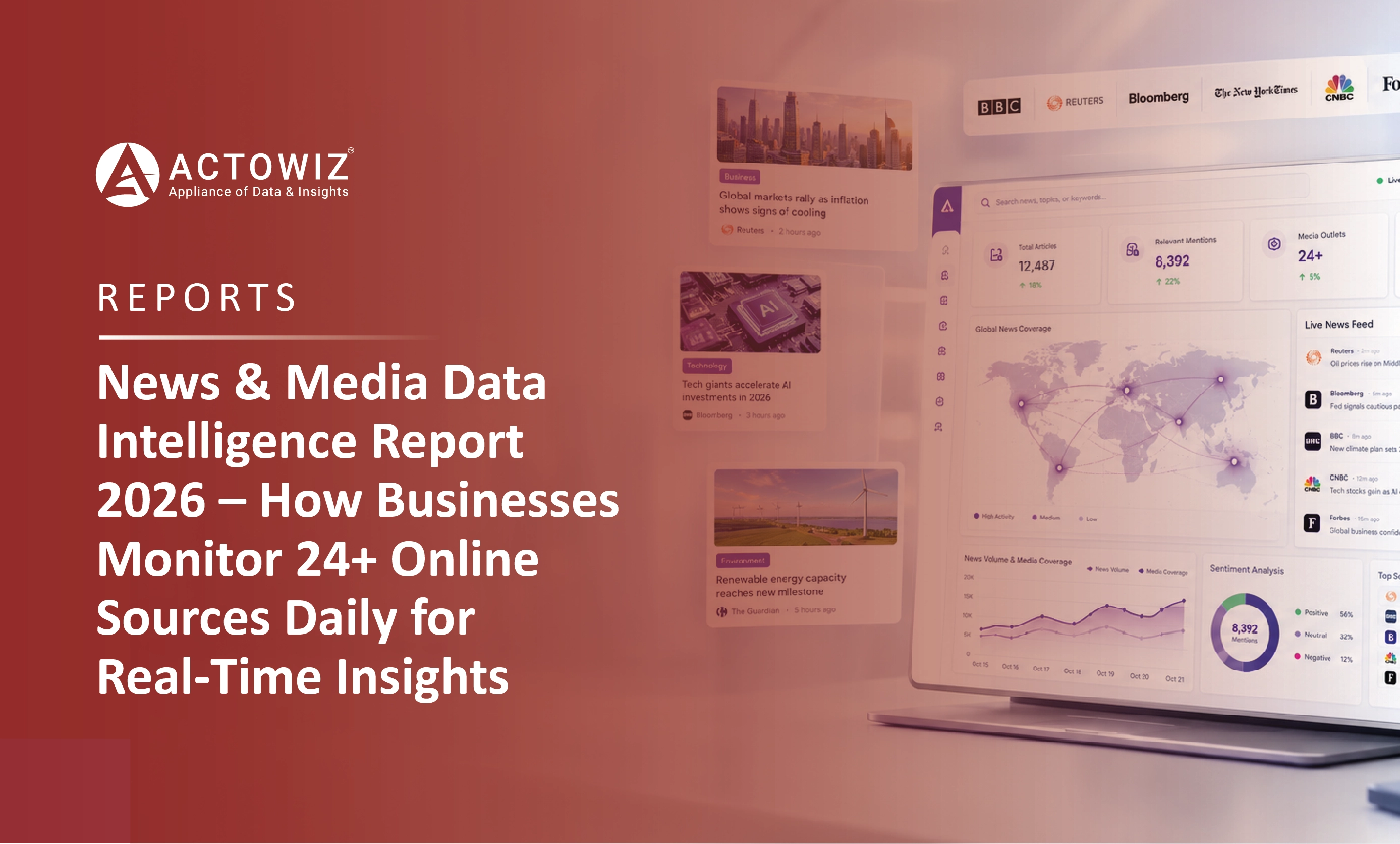
News & Media Data Intelligence Report 2026 – How Businesses Monitor 24+ Online Sources Daily for Real-Time Insights

News & Media Data Intelligence Report 2026 helps businesses monitor 24+ online sources daily for trends, competitors, news, and market insights.

Start Where It Makes Sense for You

Whether you're a startup or a Fortune 500 — we have the right plan for your data needs.

icons
Enterprise
Book a Strategy Call
Custom solutions, dedicated support, volume pricing for large-scale needs.
icons
Growing Brand
Get Free Sample Data
Try before you buy — 500 rows of real data, delivered in 2 hours. No strings.
icons
Just Exploring
View Plans & Pricing
Transparent plans from $500/mo. Find the right fit for your budget and scale.

Request Free Sample Data

Our team will reach out within 2 hours with 500 rows of real data — no credit card required.

+1 ▼
✓ Free 500-row sample · No credit card · Response within 2 hours